Why Smart Enterprises Never Bundle Azure MACC with Unified Support.

The Deal That Looks Like a Win — Until It Isn't
Picture the scene: your enterprise is finalizing a major Microsoft agreement. The account team is polished, the deck is slick, and the numbers look compelling. Azure savings on one side, premium support on the other — all wrapped up in a single tidy package. You sign. You celebrate. And then, over the next two or three years, you slowly realize you have no leverage left. You are locked in, overpriced, and entirely at Microsoft’s mercy on both fronts.
This is not a hypothetical. It happens to sophisticated enterprises every quarter, and it happens because of one decision: bundling an Azure Microsoft Azure Consumption Commitment (MACC) with Unified Support in a single negotiation.
Do not do it. This post explains exactly why — from a business leverage perspective, from a legal perspective, and from the perspective of knowing who in the room actually has your interests at heart.
What We’re Actually Talking About
First, let’s be precise about what these two products are, because the conflation of them is itself part of the problem.
An Azure MACC (Microsoft Azure Consumption Commitment) is a multi-year contractual commitment to consume a specified volume of Azure cloud services. In exchange for that volume pledge, Microsoft offers pricing benefits — discounts, credits, or preferential rates on Azure consumption. It is, in essence, a cloud spend commitment.
Unified Support is Microsoft’s premium enterprise support tier — the successor to Premier Support. It provides access to designated support engineers, proactive services, and prioritized response times. It is priced as a percentage of your total Microsoft spend, which alone should raise an eyebrow, because it means the more you spend on Microsoft products, the more you pay for the privilege of getting help with them.
These are two separate commercial relationships. They serve different functions. They should be evaluated, competed, and negotiated independently. Microsoft wants them bundled because it makes deals larger, stickier, and harder to unpack. But what is good for Microsoft’s quarterly numbers is almost never good for your organization’s negotiating position.
The Core Problem: You Lose All Leverage
Here is what bundling does to your negotiating position: it destroys it.
When an Azure MACC and Unified Support are packaged together, the total deal value becomes the anchor — and that anchor obscures everything. Individual line items lose their visibility. You can’t tell whether the “Azure discount” you’ve been offered is real or whether it’s partially subsidized by an inflated support fee. You lose the ability to benchmark either product independently because they no longer have independent prices in your negotiation.
Bundling also eliminates competitive pressure from the support side of the equation. Enterprises that negotiate support separately can — and should — explore alternatives. Third-party providers like US Cloud offer enterprise-grade support for Microsoft environments. Internal support teams, scaled with hyperscaler-native tooling, can absorb more support functions than most enterprises realize. Developer-tier support, combined with targeted escalation contracts, is a viable structure for many organizations. The moment Unified Support is baked into your MACC, none of these alternatives are even on the table.
And Unified Support pricing is notoriously opaque. It is calculated as a percentage of your Microsoft spend, which creates a perverse incentive structure: the more Microsoft products you buy, the more support costs — automatically, without any additional service delivery. Bundling it with an Azure commitment, where Microsoft is already asking you to increase spend, compounds this problem significantly.
The psychology of the bundle also works against you. Large total contract values feel like savings — Microsoft’s sales teams are expert at presenting a bundled figure alongside a “value delivered” calculation that makes the math look favorable. But favorable-looking math and favorable actual economics are not the same thing. Separate the products, benchmark them independently, and the picture almost always looks different.
The bottom line is simple: you didn’t lose leverage at signing. You lost it the moment both products landed on the same order form.
The Legal Dimension: This May Not Just Be Bad Strategy — It May Be Illegal
The business case against bundling is strong. The legal case makes it categorical.
Section 1 of the Sherman Antitrust Act prohibits agreements, combinations, and conspiracies that unreasonably restrain trade. Among the practices most scrutinized under §1 are tying arrangements: situations where a seller conditions the purchase of one product — or access to favorable pricing on that product — on the buyer also purchasing a separate product.
Microsoft’s position in cloud infrastructure is substantial. Azure is one of the two or three dominant global hyperscalers. That market power is precisely the legal trigger for heightened scrutiny of tying arrangements. When a company with significant market power in a tying product conditions favorable access to that product on the purchase of a separate tied product, courts and regulators pay attention.
Apply that framework here. If a Microsoft sales representative or account manager implies — explicitly or through deal structure — that favorable Azure pricing is contingent on purchasing Unified Support from Microsoft, that is a tying arrangement. And that tying arrangement may run afoul of §1 of the Sherman Act.
The principle is not subtle: an Azure pricing advantage cannot be conditioned on buying support from Microsoft. Period.
What to Do If a Rep Pushes This
If a Microsoft sales representative, account manager, or anyone else on the Microsoft side implies that your Azure pricing depends on also taking Unified Support, you have three immediate steps:
- Ask them to put it in writing. This request alone will clarify the situation quickly. Legitimate deal structures can withstand documentation. Legally problematic ones tend to evaporate the moment written confirmation is requested.
- Get your General Counsel on the phone. This is not an escalation for your procurement team alone. The moment tying language surfaces in a negotiation with a company of Microsoft’s market position, it is a legal matter.
- Document everything. Emails, call notes, meeting summaries — everything. If this becomes a legal or regulatory matter, your documentation is your foundation.
A word of reassurance: if you encounter this, you have most likely run into a quota-pressured or rogue seller, not official Microsoft policy. Microsoft’s legal team is well aware of antitrust exposure. But that does not mean the encounter should be brushed aside. Treat it seriously, document it accordingly, and involve your legal team without delay.
Know Who Is in the Room — and Whose Interests They Serve
Understanding the bundle dynamic requires understanding the incentives of everyone at the table. Microsoft’s commercial team is not adversarial — but they are not neutral. They have targets, quotas, and commission structures that are optimized for Microsoft’s revenue, not your cost efficiency. Knowing that is not cynical; it is simply accurate.
The Quota-Pressured Sales Rep
End of quarter. Behind on numbers. Looking to consolidate a bigger deal and close it fast. Bundling MACC and Unified Support solves their problem: it inflates total contract value, makes the deal look more strategic to their management, and gets them to close. It does not solve your problem. When you see urgency pressure, vague discount language, or resistance to separating line items, recognize what you are looking at.
The Microsoft Account Manager
Account managers are incentivized on total contract value and account retention. A bundled deal locks in more revenue across more product lines. They may genuinely believe the bundle is good for you — and in some framing, they can make a coherent case for it. But their incentive structure does not align with your goal of maximizing negotiating leverage and minimizing total cost of ownership. Listen to them. Do not defer to them on deal structure.
The Microsoft-Aligned Consultant
This is the most important category. If a consultant or advisory firm recommends bundling Unified Support with your Azure MACC or Microsoft EA, one of two things is true: they have a conflict of interest (Microsoft referral relationships, partner incentives, or co-sell arrangements), or they do not know what they are doing. Neither is acceptable. Either way, find different counsel. An advisor who recommends tying your support contract to your cloud commitment is not working for you.
What You Should Do Instead
The alternative to bundling is not complicated. It just requires discipline and, ideally, independent advisory support.
- Negotiate MACC and Unified Support on separate tracks. Separate timelines are even better. When they are decoupled, Microsoft cannot use one as leverage over the other — and neither can you, which forces both sides to compete on the actual merits of each product.
- Get competitive bids on support. Microsoft Unified Support should have to earn your business. Put third-party providers like US Cloud in the room. Explore internal capabilities augmented by hyperscaler-native tooling. Use the competitive process to create real pricing pressure.
- Engage an independent advisor. Find one with no Microsoft referral incentives, no co-sell arrangements, and no partnership tiers. An advisor who is genuinely independent will tell you what you need to hear, not what keeps the relationship with Microsoft warm.
- Build your MACC on real consumption forecasts. Microsoft’s teams will push you toward higher commitment volumes — it increases their revenue and accelerates your lock-in. Resist inflated projections and build your commitment around what your organization will actually consume, with realistic growth assumptions that you control.
- Involve legal from the start. Not just at signing. During negotiations. Your General Counsel or outside counsel should understand the deal structure before it is finalized, not after.
- Use separation as leverage. When Microsoft pushes to bundle, respond with clarity: “We’re happy to discuss support separately, once we’ve finalized the MACC.” That sentence reframes the negotiation and signals that you understand what they are doing.
The Bottom Line
Bundling an Azure MACC with Unified Support is not a shortcut. It is a trap. It is a trap that weakens your negotiating position on two separate multi-million-dollar contracts simultaneously, exposes you to a support pricing model that grows automatically with your Microsoft spend, and — if improperly structured — may implicate federal antitrust law.
Enterprise buyers have more power in these negotiations than Microsoft wants them to believe. Legal protections exist. Competitive alternatives exist. Independent advisory resources exist. Use them.
If a Microsoft sales rep pushes tying language, ask for it in writing and call your GC. If a consultant recommends the bundle, find a different consultant. If the deal structure puts both products on the same order form, push back — hard — and separate them.
The best Microsoft partnerships are built on mutual accountability, transparent pricing, and arms-length commercial discipline. Bundling destroys all three. Separate the deals, protect your leverage, and negotiate from a position of strength.


FinOps Cost Optimization Starts With Microsoft Support – Part 1
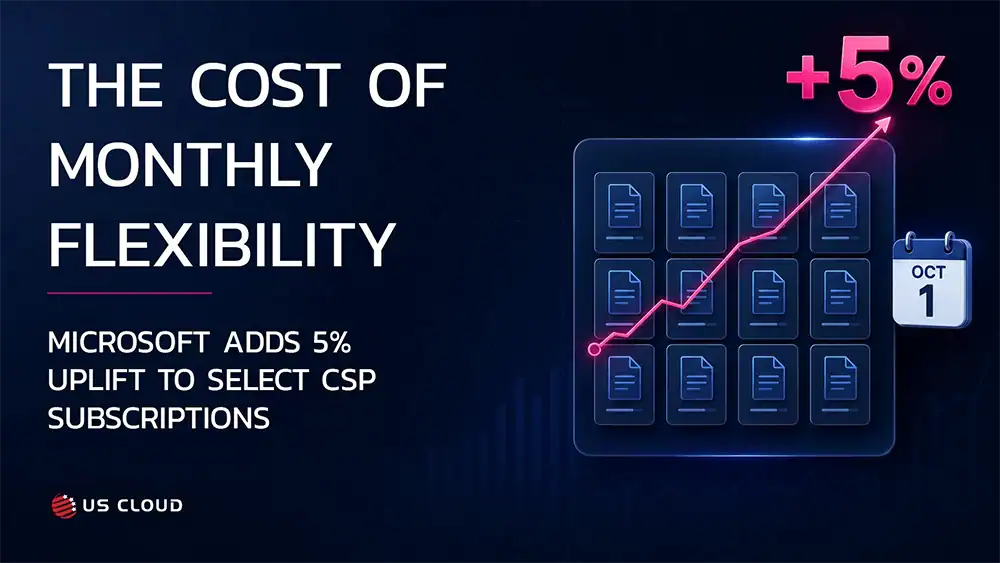
Microsoft CSP Monthly Billing Gets a 5% Uplift: What Enterprise Buyers Need to Know