Why Microsoft Hides Unified Support Inside Your Enterprise Agreement.

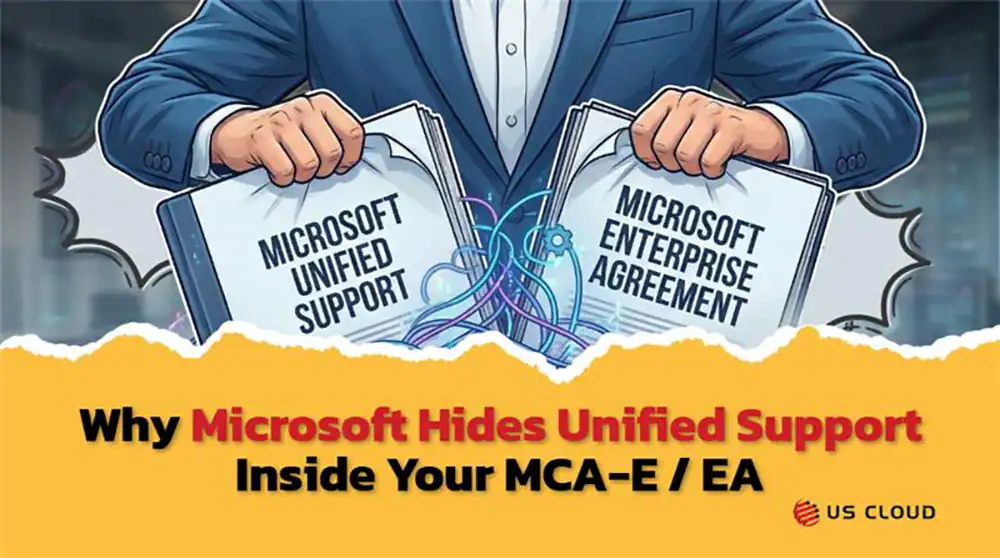
Every year, thousands of enterprise CIOs sign Microsoft Enterprise Agreements without questioning a seemingly innocuous contractual detail: their Unified Support contract expires on the exact same date as their licensing agreement. This “coterminous” structure isn’t accidental—it’s a deliberate sales tactic that may violate antitrust law while costing your organization millions in unnecessary expenses.
Here’s what most executives don’t realize: Microsoft systematically aligns Enterprise Agreement and Unified Support termination dates, effectively forcing customers to bundle both into their next renewal or risk losing critical services. With the accelerating transition from traditional EAs to Microsoft Customer Agreements for Enterprise (MCA-E), organizations face a pivotal decision point that will impact their technology budgets for years to come.
The stakes couldn’t be higher. This bundling practice benefits only Microsoft while raising serious legal and financial concerns that every CTO, CFO, and procurement leader needs to understand—before signing their next renewal.
Coterminous vs. Decoupled: Why It Matters
Here’s what a typical Microsoft “default” structure looks like in contrast with a decoupled model:
| Contract Design | Licensing (MCA-E/EA) | Unified Support | Effect on You |
|---|---|---|---|
| Coterminous (Microsoft default) | Renews on Day X | Forced to renew on same Day X | No separate decision window; zero leverage |
| Decoupled (best practice) | Renews on Day X | Renews 6–18 months before/after Day X | Time to benchmark, run RFPs, and negotiate support |
Coterminous structures are not about convenience; they’re about collapsing your options.
What Microsoft Is Really Doing: The Anatomy of Coterminous Contracts
While what the Microsoft sales team is doing looks like a standard bundling “deal,” there is much more behind the scenes that pushes coterminous contracts. Instead of an advantageous deal into a practice that secretly benefits Microsoft more.
The Sales Pitch vs. The Reality
When Microsoft account teams present coterminous contracts, they frame the arrangement as “convenient” and “streamlined.” Why deal with multiple renewal cycles when you can handle everything at once? It sounds reasonable—until you understand what’s really happening.
The practice forces customers to address contract renewal all at once for licensing and support instead of making time to handle each one separately. This isn’t about your convenience—it’s about eliminating your options. By bundling these agreements, Microsoft reduces your ability to evaluate alternatives, compare pricing, or negotiate from a position of strength.
How the Bundling Mechanism Works
The financial structure of bundled support reveals Microsoft’s true strategy. Unified Support pricing scales with your total Microsoft spend across Azure, Microsoft 365, Dynamics, and other products. As your cloud consumption grows, your support costs automatically escalate—whether or not you need additional support services.
Multi-year Unified Support agreements tied to Microsoft MCA-E (EA) include a true-up clause where costs are recalculated if enterprise spending increases beyond a buffer rate, typically around five percent. Here’s the catch: there is no cap on these increases and no true-down clause if your organization moves services off Azure or reduces consumption. The ratchet only turns one direction—up.
How the Unified Support Ratchet Really Works
| Scenario | Microsoft Spend Change | Unified Support Reaction | Who Wins? |
|---|---|---|---|
| Azure growth beyond 5% buffer | ↑ | Support cost increases mid-term (true-up) | Microsoft |
| Azure / M365 spend flat or slightly down | ↔ / ↓ | Support cost remains at previous higher rate | Microsoft |
| Significant workload shift off Azure | ↓↓ | No automatic reduction in support fee | Microsoft |
| Customer asks for re-price based on lower use | ↓ | Typically denied; tied to peak consumption | Microsoft |
The compounding effect is devastating. As your cloud spend grows (which Microsoft actively encourages), your support costs automatically escalate. You’re essentially paying a percentage-based fee on top of already-increasing cloud consumption, creating a double taxation on your technology investment.
The Financial Impact
For most enterprise organizations, Unified Support typically represents 4–6% of an MCA-E/EA’s total cost. That might sound modest until you calculate the actual dollars: these contracts are often worth over ten million dollars over three years for Fortune 500 and even more for Global 2000 companies.
Consider an organization spending $200 million on Microsoft products over a three-year MCA-E/EA. At six percent, Unified Support alone costs $12 million. If cloud spending increases by twenty percent (a conservative estimate given typical Azure growth), that support cost can balloon to over $14 million with no corresponding improvement in service quality. These automatic escalations happen quietly, buried within the larger MCA-E/EA renewal process where they escape scrutiny.
Example: The Quiet $2M–$3M Uplift
| Metric (3-Year Term) | Baseline | After 20% Cloud Growth |
|---|---|---|
| Total Microsoft Spend | $200M | $240M |
| Unified Support % | 6% | 6% |
| Unified Support Cost | $12M | $14.4M |
| Increase in Support Spend (No Better Service) | — | +$2.4M |
Bottom line: that extra $2.4M is not tied to any specific SLA, project, or additional value. It’s simply Microsoft taxing your growth.
The Legal Problem: Why This Practice Raises Antitrust Concerns
Not only do coterminous contracts repeatedly craft terms that favor Microsoft terms over customer benefit, this practice should raise your legal team’s eyebrows. Here’s why.
Understanding Tying Arrangements Under U.S. Law
In antitrust law, tying occurs when a seller requires a customer to purchase a second product in order to purchase the first product which the seller dominates. This practice is illegal when it allows a company to leverage monopoly power in one market to gain unfair advantage in another.
Microsoft knows this territory well. In 1994, following antitrust litigation, Microsoft consented not to tie other Microsoft products to the sale of Windows, though it remained free to integrate additional features into the operating system. That consent decree emerged from recognition that Microsoft’s dominance in operating systems could be weaponized to control other software markets.
The Sherman Antitrust Act and Clayton Act specifically prohibit companies from using market dominance to force customers into purchasing separate products or services. When examining Microsoft’s coterminous contract strategy through this legal framework, troubling patterns emerge.
Microsoft’s Pattern of Bundling Behavior
Microsoft’s bundling practices have repeatedly attracted regulatory scrutiny:
- The European Commission found Microsoft tied Windows Media Player to its PC operating system, harming consumer benefit through market foreclosure.
- The remedy required Microsoft to offer unbundled versions, acknowledging that tying practices can illegally leverage dominance from one market into another.
- More recently, the Federal Trade Commission began investigating Microsoft’s bundling practices, particularly how the company packages Office products with cybersecurity and cloud computing services.
- The European Union has accused Microsoft of breaching antitrust rules with abusive bundling of Teams and Office products, forcing the company to unbundle these offerings in certain markets.
These aren’t isolated incidents—they represent a consistent pattern of Microsoft using dominance in productivity software and operating systems to capture adjacent markets through bundling tactics.
Why MCA-E (EA) Support Bundling Fits the Tying Definition
The coterminous contract structure meets every element of an illegal tying arrangement. Use the chart below to understand how elements of the typical Microsoft practice of tying suits the definition of the antitrust practices we’ve just discussed.
Mapping MCA-E/EA Unified Bundling Against Tying Criteria
| Tying Test Element | How MCA-E + Unified Bundling Fits |
|---|---|
| Two distinct products | Licensing (MCA-E/EA) vs. support (Unified) |
| Dominant position in the tying product | Microsoft holds market power in OS, productivity, and enterprise licensing |
| Conditioning purchase of one on the other | Favorable MCA-E terms require Unified renewal; contracts aligned coterminously |
| Foreclosure of competition in the tied product market | Third-party Microsoft support effectively shut out during renewal window |
| Customer coerced, not freely choosing second product | Realistic choice is “accept bundle or risk licensing disruption” |
First, we have two distinct products: software licensing (the tying product) and support services (the tied product). These serve different functions and are provided by different parts of Microsoft’s business.
Second, Microsoft possesses market dominance in enterprise licensing. Most large organizations are deeply embedded in the Microsoft ecosystem for productivity software, operating systems, and increasingly, cloud infrastructure. This creates the leverage necessary for tying concerns.
Third, the conditioning mechanism is explicit. Microsoft offers favorable MCA-E/EA terms contingent on support renewal and deliberately structures contracts so both agreements terminate simultaneously. Better pricing, more generous licensing terms, or included cloud credits often depend on maintaining the bundled relationship.
Finally, there’s a clear foreclosure effect. When support contracts are locked to MCA-E/EA terms, customers cannot meaningfully evaluate third-party support alternatives. The decision window is compressed, creating pressure to simply accept Microsoft’s terms rather than risk disruption to critical licensing agreements.
The “Technically Illegal” Argument
Contracts that promise lower costs or threaten higher prices by leveraging one market for advantage in another market are not compliant with antitrust law. Microsoft is leveraging its monopoly power in operating systems and productivity software to dominate the enterprise support market—a textbook example of illegal tying.
The anticompetitive intent is clear: blocking competitors from lucrative enterprise support contracts. Third-party support providers—many recognized by Gartner, IDC, and other analyst firms—offer comparable or superior service at significantly lower costs. Yet Microsoft’s bundling strategy prevents customers from accessing these alternatives during the critical renewal window when switching would be most practical.
Why This Sales Tactic Only Helps Microsoft
As we’ve said before, this coterminous contract practice favors Microsoft. It does not offer fair terms to the customer. On a higher level, this benefits the company as a whole. See below for how this practice, perpetuated over and over for Unified Support clients around the world, has garnered gains for Microsoft.
Elimination of Customer Negotiation Power
Microsoft gains the upper hand by wielding contracts as being dependent on one another, offering certain pricing only by keeping renewal dates bundled. This creates asymmetric negotiation dynamics where Microsoft holds all the leverage.
When MCA-E (EA) and Unified Support renew simultaneously, Microsoft can:
- Threaten to withhold favorable MCA-E/EA terms
- Bundle in unwanted cloud services
- Slow-walk the renewal process if customers push back on support pricing
The psychological pressure of simultaneous deadlines forces enterprises into accepting unfavorable terms rather than risk operational disruption.
Imagine negotiating your mortgage and car loan with the same lender, on the same day, with each deal contingent on the other. That’s the position Microsoft creates for enterprise customers.
Who Wins Under a Bundled MCA-E (EA) + Unified Renewal?
| Dimension | Customer Outcome | Microsoft Outcome |
|---|---|---|
| Negotiation leverage | Weak: cannot separate licensing from support | Strong: can trade one against the other |
| Transparency of support pricing | Low: buried inside MCA-E totals | High: full visibility internally |
| Ability to say “no” to support | Very low: risks EA disruption | High: can walk away from discounts |
| Time to evaluate alternatives | Minimal | Irrelevant |
Preventing Market Competition
By bundling Unified Support with MCA-E/EA agreements, Microsoft quietly picks up another six to twelve percent in margin over three years and avoids scrutiny of rapidly expanding costs. This bundling effectively locks out third-party competitors who could provide equivalent or better service.
Third-party Microsoft support providers recognized by leading analyst firms consistently deliver response times, resolution rates, and customer satisfaction scores that meet or exceed Microsoft’s Unified Support. Industry analysts report that 50% cost savings or more is possible with third-party Microsoft support—savings that represent millions of dollars for large enterprises.
Yet Microsoft’s coterminous contract strategy ensures most enterprises never seriously evaluate these alternatives. The bundled structure creates artificial barriers to entry that protect Microsoft’s support revenue stream from competitive pressure.
Automatic Revenue Growth Without Value Improvement
The true-up mechanism creates a remarkable business model for Microsoft: automatic revenue growth without any obligation to improve service quality. As your Azure spending increases, support costs escalate proportionally. Yet there are no contractual service level improvements tied to these price increases.
If Azure spending skyrockets, organizations must pay based on higher spending with no flexibility to renegotiate price or drop support. You’re essentially paying Microsoft more money for the privilege of spending more money with Microsoft—a self-reinforcing cycle that benefits only the vendor.
This stands in stark contrast to competitive markets where increased spending typically comes with volume discounts or enhanced service commitments. Microsoft’s bundled support model inverts this relationship entirely.
Strategic Lock-In for Cloud Migration
The bundling strategy serves a larger strategic purpose: forcing enterprises onto Microsoft’s cloud timeline rather than their own. By tying support costs to Azure consumption, Microsoft creates financial pressure to migrate workloads to Azure faster than might be strategically optimal.
This dependency extends beyond licensing into operational support, making multi-cloud strategies more difficult and expensive. Organizations considering AWS, Google Cloud, or hybrid architectures face an additional financial penalty: escalating Microsoft support costs based on their Microsoft footprint, even as they diversify their infrastructure.
The result is vendor lock-in that extends across your entire technology stack, reducing agility and increasing long-term costs.
The Financial and Strategic Damage to Enterprises
Hidden Cost Escalation
The bundled structure allows support pricing to hide within larger MCA-E/EA budgets, escaping the scrutiny it deserves. When evaluating a $200 million Enterprise Agreement, a $12 million support component can seem like a rounding error—
“Until you realize it (Unified Support) represents discretionary spending that could be reduced by fifty percent or more.”
True-up clauses create unpredictable expenses that complicate budget planning. Organizations launching significant cloud initiatives may discover their support costs have increased by millions of dollars with no advance notice or opportunity to negotiate. There’s no protection against Microsoft’s unilateral price increases, and the bundled structure makes it difficult to isolate and challenge these escalations.
Loss of Procurement Flexibility
Coterminous contracts eliminate procurement flexibility that enterprises need to manage costs effectively. You cannot right-size support based on actual needs or negotiate support renewals during favorable market conditions. Even when dissatisfied with service quality, you’re forced to renew support to maintain critical licensing terms.
Reduced IT Agility
Coterminous contracts lock enterprises into inflexible terms that make it difficult to adapt to changing business needs. Market conditions shift, business priorities evolve, and technology strategies adjust—but your bundled Microsoft contracts remain rigid.
During economic downturns or budget constraints, organizations cannot pivot to alternative support arrangements that might offer comparable service at lower cost. Innovation budgets get consumed by escalating support costs that provide no strategic differentiation. The dollars spent on premium Microsoft support could fund modernization initiatives, security improvements, or competitive technology investments instead.
Competitive Disadvantage
Organizations locked into coterminous contracts face a genuine competitive disadvantage. While their competitors redirect millions in support savings toward strategic initiatives, they’re funding Microsoft’s margin expansion. That fifty percent cost differential compounds over multiple renewal cycles, creating a persistent strategic gap.
Summary: How Bundling Harms the Enterprise
| Impact Area | Effect of Combined EA + Unified | Strategic Consequence |
|---|---|---|
| Cost | Automatic, opaque increases | Less capital for innovation |
| Procurement | No flexibility, no staggered renewals | Weak bargaining position |
| IT Agility | Locked into Microsoft’s support and cloud timelines | Slower response to business and technology change |
| Competitive Position | Higher non-differentiated spend than peers | Structural competitive disadvantage |
What Enterprises Should Do Instead
Not all hope is lost. You have a way out of this coterminating support contracts and enterprise agreements with Microsoft. Here’s what you need to do now to start developing contract terms that favor your organization and not Microsoft.
Immediately Assess Your Current Contract Structure
The first step is understanding your current situation. Review your MCA-E/EA and Unified Support agreements to identify termination dates. Are they aligned? Calculate the financial impact of this bundling by determining how much you’re spending on support and modeling the potential savings from alternatives.
Identify your upcoming renewal windows. If you have twelve to eighteen months before renewal, you have time to implement a different strategy. If renewal is imminent, you may need to negotiate an extension that allows proper evaluation of alternatives.
Decouple Your Agreements
Splitting renewal dates means Microsoft loses the ability to tie incentives and penalties across contracts, giving enterprises freedom to switch to third-party support without jeopardizing licensing terms. This single change fundamentally rebalances negotiation dynamics in your favor.
Stagger renewals to maximize negotiation leverage. Consider negotiating a one-year support renewal while maintaining a three-year MCA-E/EA term, or vice versa. This creates regular opportunities to reassess your support strategy without being locked into long-term commitments.
Create separate procurement processes for licensing and support. Different teams, different timelines, different evaluation criteria. This organizational separation prevents Microsoft from bundling these decisions together and forces proper scrutiny of each agreement on its merits.
Practical Action Plan
| Step | Owner | Timing | Outcome |
|---|---|---|---|
| Inventory MCA-E + Unified end dates | Procurement / Legal | 0–30 days | Visibility into coterminous risk |
| Model current & projected support cost | Finance / IT | 30–60 days | Business case for change |
| Engage third-party support providers | IT / Procurement | 60–120 days before renewal | Competitive benchmark & options |
| Negotiate decoupled terms with MS | Legal / Procurement | 90–180 days before EA renewal | Separate support & licensing negotiations |
| Implement staggered renewals | Procurement / Finance | At renewal | Ongoing leverage & flexibility |
Evaluate Third-Party Support Alternatives
Engage with recognized third-party providers before your renewal window. Leading alternatives are acknowledged by Gartner, IDC, and other analyst firms for delivering enterprise-grade Microsoft support. These providers typically offer faster response times, higher customer satisfaction ratings, and dramatically lower costs.
Run competitive bidding processes that include both Microsoft and qualified alternatives. The mere existence of competitive pressure will improve Microsoft’s pricing and terms, even if you ultimately remain with Unified Support. Building leverage through credible alternatives is essential for effective negotiation.
Negotiate Protective Contract Terms
If you do renew with Microsoft, demand protective terms that weren’t available under bundled contracts:
- Price caps on support tied to specific percentages or absolute amounts
- Removal of automatic renewal clauses
- Clear exit and transition provisions
- Written SLAs on response and escalation
Verbal assurances from account teams are worthless—contractual commitments are everything.
It's Time to Challenge the Default
Microsoft’s coterminous contract strategy serves Microsoft’s interests, not yours. The practice concentrates negotiation leverage with the vendor, eliminates meaningful competition in the support market, and creates automatic cost escalation mechanisms that benefit only Microsoft. These arrangements raise legitimate antitrust concerns and may ultimately face increased regulatory scrutiny as competition authorities examine Microsoft’s bundling practices more closely.
But you don’t need to wait for regulators to act. Enterprises have the power right now to refuse these terms and demand better arrangements. The first step is awareness—understanding how coterminous contracts work and why Microsoft pushes them so aggressively. The second step is action—implementing the strategies outlined above to decouple your agreements and restore competitive balance.
The financial stakes are enormous.
For a large enterprise, the difference between Microsoft Unified Support and competitive alternatives can represent twenty to fifty million dollars over a decade.
That’s not a rounding error—it’s funding for entire strategic initiatives, competitive advantages that compound over time, or bottom-line profit improvement that directly impacts shareholder value.
Schedule a call with US Cloud and review your contracts now, before your next renewal cycle begins. Assess whether you’re trapped in a coterminous structure, calculate the financial impact, and develop a strategy for breaking free. Engage procurement, legal, and IT leadership in this conversation. Challenge the assumption that bundled Microsoft contracts are inevitable or optimal.
In an era of cloud transformation and digital innovation, your support strategy should enable agility and free up resources for strategic investments—not fund Microsoft’s margin expansion through legally questionable bundling practices.
You do have a choice—once you recognize that you do.

Microsoft 365 Price Increase July 1, 2026: What Enterprise Buyers Need to Know: Part 2
Microsoft Premium Support: The 2026 Buyer’s Guide for Finance Teams