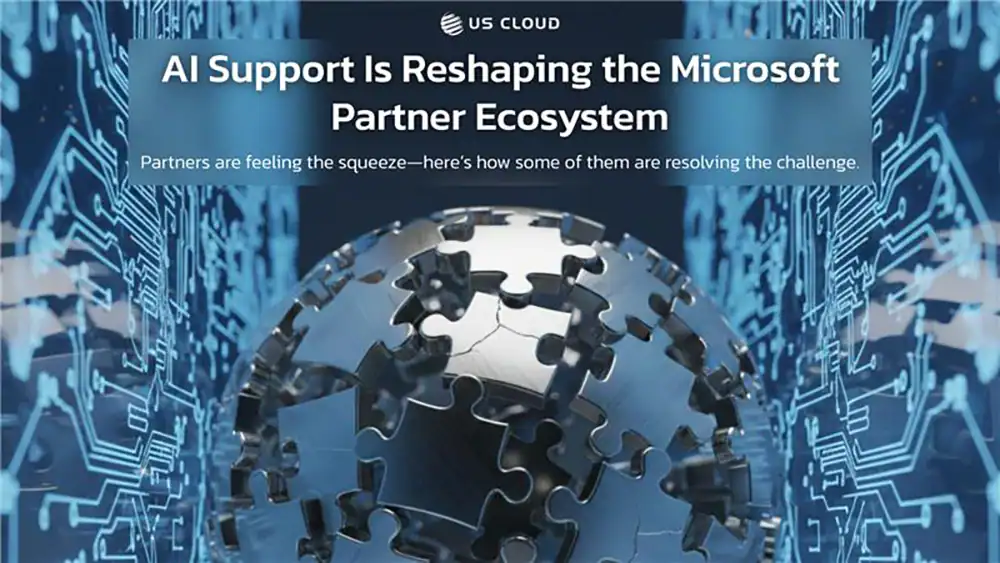
AI Support Is Reshaping the Microsoft Partner Ecosystem—And Partners Are Feeling the Squeeze.

AI is quickly becoming the interface for how Microsoft sells, delivers, and supports its technology. That’s good news if you’re looking for faster answers and more automation — but it’s also changing the rules for Microsoft’s partner ecosystem and for the enterprises that rely on it. As AI support and automated troubleshooting become embedded into Microsoft support tools like the Get Help experience, partners risk losing margin and visibility — and enterprise buyers risk losing leverage and accountability unless they adapt their support strategy.
Why Microsoft Partners Are Feeling the Squeeze Right Now
Microsoft’s AI push is no longer just a product story—it’s an operating-model story. As Copilot and AI-driven experiences become “default,” Microsoft is also changing how support is delivered, how value is captured, and which partners get visibility and margin.
At the same time, enterprise buyers are under pressure to:
- Adopt AI fast (to stay competitive)
- Control risk (security, compliance, data exposure)
- Control cost (budgets are tightening while vendors monetize AI add-ons)
Microsoft’s own earnings messaging reinforces the scale of its AI-led momentum.
The Tension: AI Speeds Up Support but Gives More Control to Microsoft
The core argument is straightforward: Microsoft’s AI success is accelerating changes that may reduce the role and leverage of traditional partners (VARs, MSPs, consultants)—especially those built on repeatable service motions like troubleshooting, configuration, and day-to-day advisory work.
The directional trend is hard to miss:
- AI support shifts resolution upstream (self-serve, guided, automated).
- Microsoft support tools become the first line of defense—and the default customer “touchpoint.”
- Partner programs increasingly reward AI readiness, specialization, and consumption-led outcomes.
What Microsoft Is Changing for Partners, in Plain Terms
Microsoft is modernizing troubleshooting into productized “AI support” experiences.
One visible indicator: Microsoft has been moving troubleshooting experiences into the Get Help app and related guided flows.
Microsoft community guidance (from Microsoft Q&A) explicitly notes that older troubleshooting platforms are deprecated and that troubleshooters are being ported to the Get Help platform.
What this means for enterprises:
- Your users will increasingly be routed into Microsoft-owned support surfaces first.
- “Basic fix” tickets may resolve faster, but your support motion becomes more dependent on Microsoft’s tooling choices and roadmap.
What this means for partners:
- If a portion of your service revenue is tied to routine troubleshooting, AI-driven self-serve flows can compress that value (fewer billable hours, fewer touchpoints, less stickiness).
Microsoft is changing partner support offerings and expectations.
Microsoft has publicly documented changes to partner support offerings announced June 26, 2025, and which took effect beginning September 15, 2025.
Why this matters to partners:
Support isn’t just a back-office function—it affects:
- How quickly partners can resolve issues for customers
- How partners staff escalation paths
- The perceived value of a partner relationship
When the underlying support scaffolding shifts, partners either adapt quickly or absorb the friction.
Microsoft’s partner program continues to optimize for AI-era differentiation.
Partner program updates increasingly emphasize AI-aligned capabilities, skilling, and specialization changes. For example, Microsoft’s Partner Center announcements highlight specialization updates integrating AI capabilities and revised requirements to align to “agentic” and AI app priorities.
Translation: Microsoft is signaling what it wants the ecosystem to become.
The Partner Impact: What Changes When “AI Support” Is Embedded Everywhere?
The LinkedIn article linked previously in this piece frames this as an “AI-first restructuring cycle” that feels more disruptive than prior cycles.
Here’s the practical impact in three buckets:
Margin Compression Risk
When Microsoft’s tools handle more of the “baseline” work:
- Partners may lose margin on standardized services
- Buyers may question paying for tasks that look “automated”
For Procurement Experts: this is where you should push for clearer outcome-based pricing, not activity-based pricing.
Reduced Visibility and Fewer Customer Touchpoints
If Microsoft’s surfaces become the default starting point, partners can lose:
- First-call advantage
- Ongoing advisory influence
- “Stickiness” that supports renewals and expansions
Faster “Specialize or Struggle” Divide
Partners who can credibly lead AI governance, security, adoption, and change management will do well. Partners positioned primarily as resellers or generalists will feel pressure.
Microsoft’s own partner updates point toward this “differentiation and readiness” theme continuing.
What enterprise IT leaders should do next (a practical checklist)
Step 1: Map your support reality (not your support assumptions)
Ask:
- Where do tickets originate today (internal help desk, partner, Microsoft)?
- Which categories are trending upward (identity, security, collaboration, Azure)?
- How often do “simple” issues turn into multi-system incidents?
Step 2: Separate “AI support convenience” from “support accountability”
AI support and automated troubleshooting are useful—but enterprises still need:
- Root-cause analysis
- Escalation ownership
- Cross-product expertise
- Human judgment in high-severity incidents
Step 3: Re-Negotiate Leverage into Your Contracts
Whether you buy from Microsoft, a partner, or a third party:
- Require clear SLAs, escalation paths, and measurable response times
- Avoid structures that eliminate your decision window at renewal time
- Benchmark support as a standalone line item (cost and performance)
Where US Cloud Fits: Partner-Friendly Support that Protects Your Outcomes
If Microsoft’s strategy increasingly optimizes for Microsoft-first delivery, partners and enterprises need an option that restores leverage and predictability.
US Cloud’s position is simple:
- Keep Microsoft environments supported
- Reduce support cost
- Improve responsiveness
- Preserve buyer leverage in renewals and vendor strategy
(For background on US Cloud’s third-party Microsoft support positioning and value proposition, see US Cloud’s Partner overview page.)
How US Cloud can help partners specifically
If you’re a Microsoft partner navigating this shift, US Cloud can function as a support backbone so you can:
- Protect customer experience when Microsoft routes more issues through its own tools
- Reduce churn caused by slow escalations or unclear ownership
- Focus your services team on higher-value work (AI readiness, security, architecture) rather than commodity troubleshooting
Microsoft’s AI-first momentum is real—and it will keep accelerating. But the more support becomes automated and productized, the more enterprises and partners need to protect what still matters: accountability, speed, and leverage.
If you’re a Microsoft partner (or an enterprise buyer) and you’re concerned about what these changes mean for your support outcomes, US Cloud can help.
Start by benchmarking your current support cost and response performance—and then decide whether a third-party support model gives you more control as Microsoft reshapes the ecosystem. Schedule a call with US Cloud today to find your next solution.


The Microsoft Support Industrial Complex: How Unified Support Became a $10B Tax on Enterprise Innovation
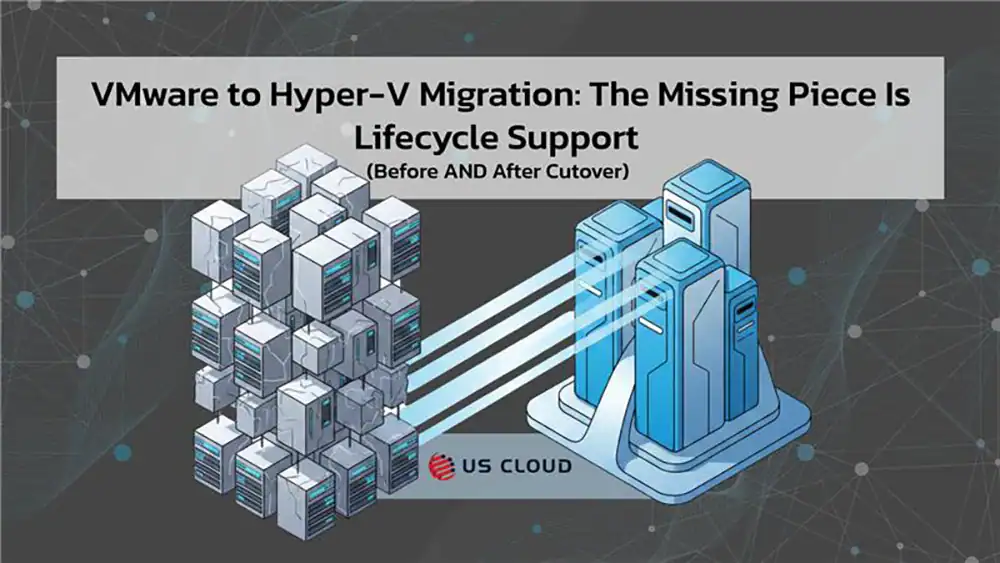
VMware to Hyper-V Migration Missing Piece: Lifecycle Support