How CIOs Are Making VMware Migrations Pay for Themselves.


Smart CIOs discovered a financial strategy that makes VMware migrations self-funding. They’re switching Microsoft support contracts to third-party providers, pocketing the savings, and using that money to cover migration costs. The approach transforms a budget crisis into a zero-cost infrastructure upgrade.
The VMware Pricing Shock Changed Everything
Broadcom acquired VMware in late 2023 and immediately restructured pricing—despite garnering a profit growth of 124%. The company eliminated perpetual licenses and bundled products into expensive subscriptions. Organizations that previously picked specific VMware products now pay for comprehensive bundles whether they need every feature or not.
The result: price increases between 800% and 1,500% for most enterprises. AT&T reported a 1,050% jump in renewal costs. Small businesses saw their VMware bills multiply by ten. A late-2024 industry survey found 98% of VMware customers now actively evaluate alternative platforms.
Gartner’s analysts predict 35% of VMware workloads will migrate to alternatives by 2028. That prediction already underestimates reality—half of VMware customers planned exits by late 2024.
Hyper-V Wins the Alternative Race
Microsoft’s Hyper-V captures the majority of enterprises fleeing VMware. The platform offers four decisive advantages:
Included Licensing
Hyper-V comes with Windows Server at no additional cost. Organizations already running Windows infrastructure gain enterprise virtualization capabilities without new licensing fees.
Native Integration
Hyper-V connects directly to Active Directory, System Center, PowerShell, and the entire Microsoft ecosystem. No translation layers create friction. Management tools speak the same language.
Azure Compatibility
Virtual machines migrate to Azure without conversion. Organizations preserve hybrid infrastructure options and cloud flexibility without additional tooling.
Active Development
Microsoft continuously ships Hyper-V improvements. The platform evolves with enterprise needs rather than sitting on legacy code.
Enterprises invested in Microsoft infrastructure—which describes most large organizations—find Hyper-V migration delivers immediate cost reduction without compromising capability.
Funding Implementation Sequence
CIOs who utilize this strategy execute the dual transition in four phases:
Phase 1: Switch Support Contracts
Transition Microsoft support to third-party provider first. This shift takes 30-60 days and generates immediate savings. The cost reduction begins before migration work starts.
Phase 2: Plan the Migration
Use support savings to fund migration planning. Catalog workloads, map dependencies, and design the transition sequence. Build detailed runbooks for each migration wave.
Phase 3: Execute in Waves
Migrate non-critical workloads first to validate processes. Apply lessons learned to subsequent waves. Maintain business operations throughout the transition.
Phase 4: Reinvest Savings
Combined savings from eliminated VMware costs and reduced support expenses fund innovation. Organizations redirect former maintenance expenses to capability improvements.
The complete transition typically spans 12-18 months. Organizations that switch support providers immediately create funding streams that cover migration costs as they occur. No budget requests required.
Timing Your VMware Migration Is Imperative
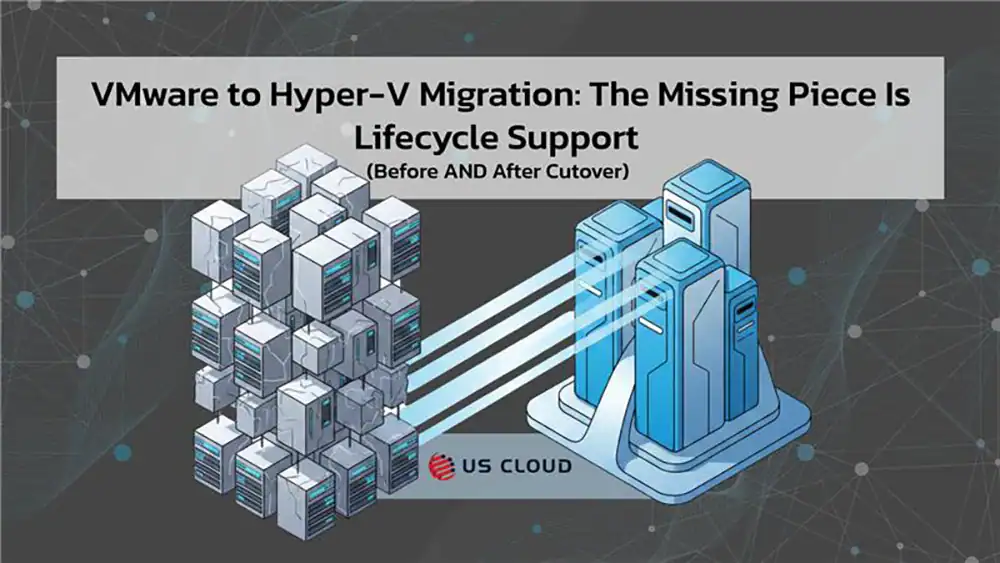
VMware Support and Subscription agreements expire on different schedules. Organizations face individual renewal deadlines. Once the deadline arrives, choices narrow dramatically: accept Broadcom’s pricing or operate without support.
Third-party support transitions require 30-60 days for handoff and integration. Hyper-V migrations demand a minimum of 6-12 months of planning and execution.
Organizations starting now build sufficient runway. Those who delay until renewal notices arrive face compressed timelines and forced decisions.
The math favors early action. Here’s your step-by-step game plan:
- Start the support switch immediately to capture 12 months of savings
- Use those savings to fund year-one migration costs
- Complete Hyper-V transition before VMware renewal deadline
- Eliminate VMware costs entirely in year two
- Maintain reduced support costs permanently
Strategic Advantage of Funding Through a Support Switch
Utilizing a switch in Microsoft support can satisfy the annual goals for multiple departments in your organization. There aren’t many ways to make the CIO and the CFO happy at the same time, but this is definitely one strategy. Here’s how approach delivers benefits beyond simple cost reduction:
Budget Neutrality
CFOs approve transitions that don’t require new funding. The support switch creates its own budget line.
Continuous Savings
Third-party support costs remain lower than Microsoft direct pricing—permanently. The savings compound annually. That’s long-term savings for more to go around for everyone.
Infrastructure Modernization
Organizations gain Azure compatibility and Microsoft ecosystem integration without budget battles.
Negotiating Leverage
Ending dependency on both Broadcom and Microsoft direct support eliminates vendor lock-in pressure.
The CIOs implementing this strategy aren’t just cutting costs—they’re restructuring IT economics to favor operational flexibility over vendor dependence.
Broadcom’s pricing reset created crisis for VMware customers. It also created opportunity for organizations willing to rethink infrastructure and support contracts simultaneously. The self-funding migration strategy transforms the crisis into competitive advantage.
Schedule a call with US Cloud today to talk about how you can generate the support savings that could be reallocated to fund the VMware migration you’ve been waiting to complete. Don’t wait until your contracts are all up and your option to choose is gone.