
Microsoft Monopoly: Why It’s Time to Replace Unified Support
Microsoft has engineered its support model to serve its own business priorities—not yours. With each renewal cycle, Unified Support costs continue to climb while service quality steadily declines. IT leaders are left with fewer choices, shrinking leverage, and a system designed to keep them dependent on Microsoft, no matter the price.
By blurring the lines between software licensing and support, Microsoft keeps procurement locked in, too. What was once a strategic decision about how to best serve your IT team has been reduced to a take-it-or-leave-it offer. The result? An overpriced, underperforming support experience that no longer delivers the value enterprises deserve.
US Cloud exists to break that cycle—restoring competition, transparency, and accountability to Microsoft support.
Breaking Microsoft’s Grip on Support
Microsoft’s Unified Support is not the only option. By choosing US Cloud, enterprises reclaim leverage, unlock major cost savings, and gain a partner fully focused on their success—not on driving Microsoft’s product roadmap.
The Illusion of Choice
Microsoft’s dominance in the enterprise space means many IT leaders and procurement experts tend to assume Unified Support is mandatory. It isn’t.
In reality, Microsoft has carefully crafted a support ecosystem that looks like the only option while shutting out competition. This illusion leaves organizations feeling trapped, when in fact there are better alternatives.
US Cloud provides that alternative. We deliver the same access to Microsoft expertise—without the monopolistic pricing structure. By stepping outside the Microsoft-controlled ecosystem, enterprises regain the power of choice.
Artificial Dependencies
Unified Support is structured to make businesses feel dependent on Microsoft for both products and services. Licensing and support are presented as inseparable, when they are not. This artificial bundling removes flexibility, limits negotiation power, and inflates costs.
By decoupling support from licensing, US Cloud restores control to enterprises.
You can continue to use Microsoft products while choosing the support partner that aligns with your budget, service expectations, and business priorities.
Rising Costs, Lowering Value
Under Unified Support, organizations face annual cost increases with no corresponding improvement in quality. Escalations stall, ticket resolution times stretch, and dedicated expertise becomes harder to access—all while procurement budgets take a hit.
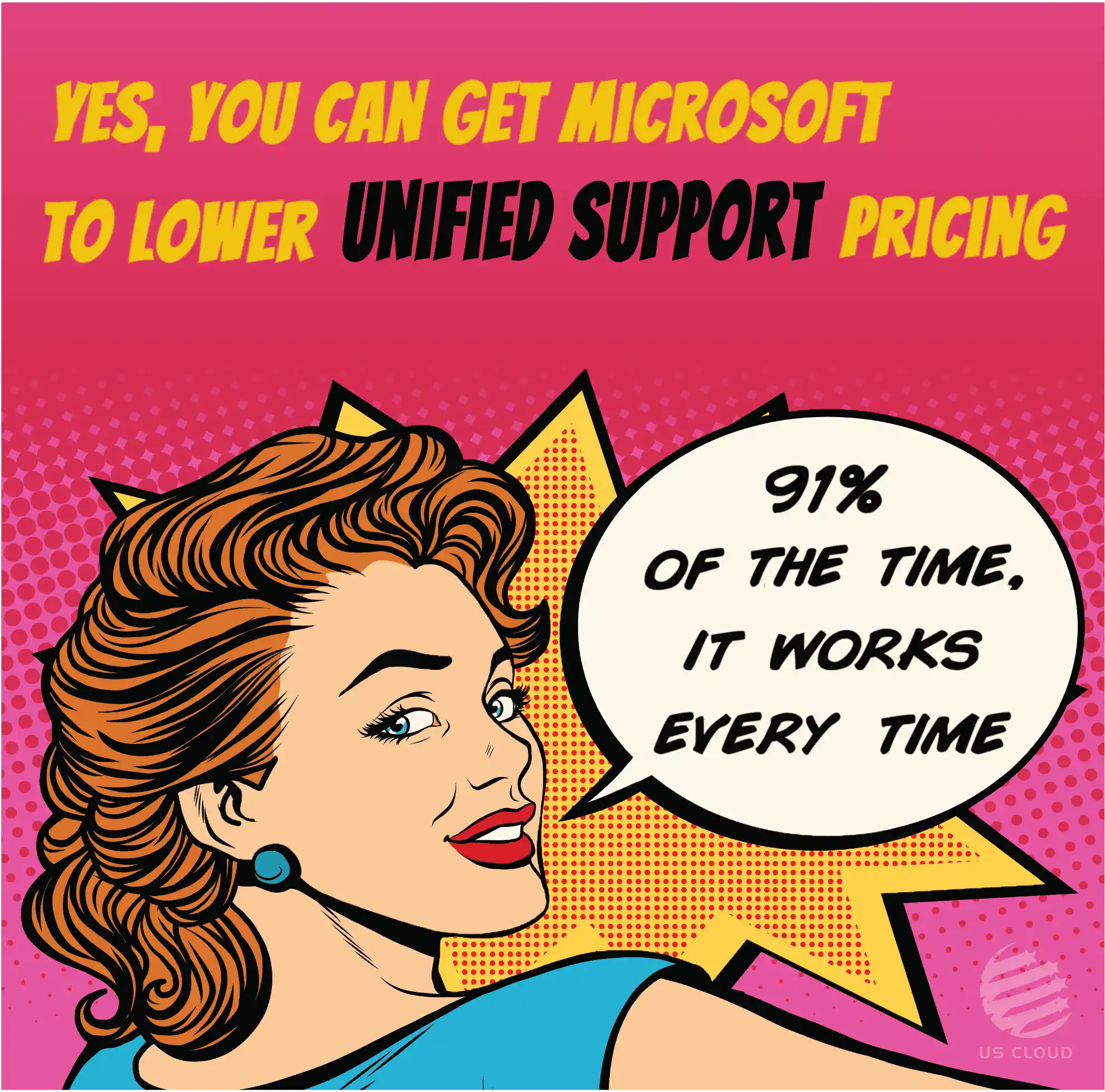
US Cloud flips that model. We deliver premium support for half the cost on average, backed by strict SLAs and real accountability. Instead of overpaying for less, IT leaders gain more value for every support dollar spent.
Restoring Competition and Accountability
When Microsoft controls the entire support ecosystem, accountability disappears. There is no competitive pressure to improve service or control costs. Customers are left paying more while their influence shrinks.
US Cloud reintroduces competition to the market. Our model is transparent, predictable, and designed to earn your trust every day. We measure success by customer satisfaction and measurable outcomes—not by steering you into Microsoft’s roadmap.
A Better Path Forward
The Microsoft monopoly doesn’t have to dictate your IT support strategy. By replacing Unified Support with US Cloud, enterprises free themselves from artificial dependencies, regain financial leverage, and ensure accountability from their support provider.
It’s time to put control back in your hands—and keep Microsoft focused on being your software vendor, not your only support option. Download the eBook for a more in-depth look at what you can do to break free from monopolistic practices.