The Microsoft Monopoly on Support Is Over—Here’s Your Playbook for What Comes Next.

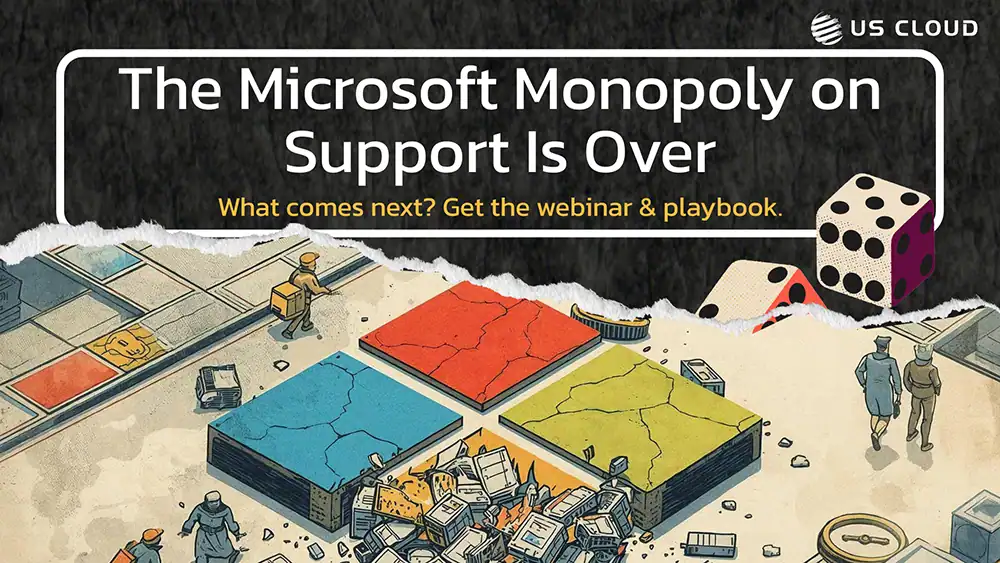
For years, “Microsoft support” felt synonymous with Microsoft itself. Not anymore. As Unified tied pricing to licensing spend—and as response quality fluctuated—enterprises began re-examining their options. Today, third-party Microsoft support is a credible, lower-cost and often higher-quality alternative that still preserves escalation to Microsoft when truly necessary. This post curates the most useful insights from our webinar—so you can decide what to do before your renewal date hits.
Executive Summary
- Unified’s “unlimited” model is tied to your Microsoft spend, not your actual support needs; costs rise with adoption.
- Quality and responsiveness have declined due to outsourcing and organizational shifts; enterprises need faster, senior-level expertise.
- Third-party Microsoft support is now a mature, proven option with cost savings, guaranteed SLAs, and product-group escalation paths when needed.
- Regulated industries (finance, healthcare, government) benefit from on-shore engineering and data-sovereignty alignment.
- Best action now: If your renewal hits this month, get a quote and secure capacity before end-of-month to lock savings and SLA coverage.
This post distills the most actionable takeaways from our webinar, “Microsoft Monopoly on Support Is Dead—Now What?” Watch the full conversation on YouTube for deeper context and examples.
Why You Need to Check the Facts in This Webinar
If you lead IT operations, procurement, or finance at a company with 100+ employees and $100M+ revenue, you’re likely being asked to do more with less while modernizing, securing hybrid estates, and wrangling licensing and AI initiatives. The support model you choose for Microsoft support shapes your risk profile, response times, and budget for the next 12 months.
The webinar’s core message: Microsoft no longer holds a monopoly on Microsoft support—and that’s good news for enterprises. You’ve got credible options that can lower total cost and improve service quality—without losing access to Microsoft when it’s truly required.
Research Snapshot: What’s Changed—and What It Means
If you haven’t checked in on what’s changed in the Microsoft Support game for a while, now’s the time to straighten out the facts—before you renew your next contract. Here’s a breakdown of some of the latest developments in Microsoft Support and what that means for you.
Unified Moved from Needs-Based to Spend-Based
When Microsoft shifted to Unified (originally “Project Volta”), pricing began to track server, cloud, and user licensing spend—not the volume or complexity of actual support incidents. Costs rise with your adoption curve.
Unified Support Implication: Budget predictability suffers. As you consume more Microsoft, your support bill escalates—even if your internal team handles most issues.
Service Experience Has Become Inconsistent
The webinar highlights outsourcing of L1/L2 (and some L3) support, rising response times, and multiple workforce reductions. These factors can degrade case handling quality and continuity.
Unified Support Implication: Enterprises with complex estates need senior talent on the first touch, faster response, and continuity across shifts.
The Third-Party Model Is Proven
Drawing on parallel markets (e.g., Rimini Street, Spinnaker in other OEM ecosystems), the speakers note that OEM-agnostic support can deliver better value—and that Microsoft partners can escalate to Microsoft product groups when required.
You can replace the bulk of daily Microsoft support needs, retain escalation back to Microsoft for the 10–20% of cases that warrant it, and pay less overall.
Third-party Microsoft support is a leading replacement for Unified that’s already trusted by Fortune 500 companies to mitigate the following issues:
- Rising, unpredictable costs tied to licensing—not support volume.
- Slow responses and ticket ping-pong; too many touches before senior engineers engage.
- Regulatory and data-sovereignty requirements (finance, healthcare, government) needing onshore resources.
- Hybrid & multi-cloud complexity (Azure + on-prem + edge) demanding deep, cross-stack expertise.
- Licensing churn (CSP evolution, LSP changes) complicating EA strategy and renewal timing.
- AI pressure—opportunities are real, but governance, security, and productivity ROI must be measured.
Unified Support Implication: You don’t have to be bullied into a contract renewal because you think that Microsoft Unified Support is the only “safe” option.
Why Third-Party Microsoft Support Makes Sense
If the Unified Support system is broken, what makes the third-party Microsoft support option any better? Here’s a breakdown of why you still have a choice for Unified replacement.
Why Unified’s Pricing Model No Longer Works for Many Enterprises
What changed: Unified prices support as a percentage of your server, cloud, and user licensing. As your Microsoft footprint grows, your support price climbs—regardless of how much support you actually need.
Why it matters:
- Budgeting becomes a function of adoption velocity, not support demand.
- “Unlimited” isn’t aligned to incident volume, severity mix, or internal capability.
- Enterprises that invested in strong internal teams effectively pay twice—for capacity they already built.
Takeaway: If your incident mix is predictable and your team is mature, a needs-based third-party model typically delivers substantial value.
Service Quality: You Need Senior Engineers on the First Touch
The webinar cites outsourcing at lower tiers, shifting SLAs to “targets,” and callback windows that aren’t financially guaranteed—all of which can delay resolution.
What to demand instead:
- Financially backed response SLAs (e.g., under 15 minutes; real-world average around 5 minutes).
- Senior, L3/L4-caliber engineers fronting cases so triage becomes progress, not a hand-off.
- Shift design that preserves continuity (overlapping shifts so critical cases never stall).
Takeaway: A specialized, Microsoft-focused third-party can resolve ~80–85% of cases in-house across technologies and severities—dramatically improving MTTR.
“But Can You Still Reach Microsoft?”—Yes, and Faster Than You Think
This is the most common concern, and it’s addressed head-on in the session:
- Partners can escalate to Microsoft on your behalf using formal partner contracts (e.g., Premier Support for Partners), including to product groups for code defects, tenant-level issues, and design change requests.
- Those escalations are prioritized (think “fast pass”) in Microsoft’s queue. Once inside, the same Microsoft teams engage—no “second-class” path.
Takeaway: With US Cloud, you get a single front door (the third-party) that resolves most issues and white-gloves the rest back to Microsoft only when it’s materially needed.
Fact-Check: Common Claims You’ll Hear—and How to Respond
- “You’ll lose your DSE/EDE access.”
- Equivalent or better consulting/architecture support can be provided by the third-party—and integrated directly with support operations to avoid silos.
- “You can’t escalate to Microsoft anymore.”
- Qualified partners escalate on your behalf (including to product groups) and manage the process end-to-end.
- “Leaving Unified will hurt your EA discounts.”
- Not supported. Keep your EA relationship intact; Unified is a separate silo. Push back and ask for it in writing if threatened.
- “You can’t come back later.”
- Also false. If you ever return, Microsoft will compete to win you back; there’s no penalty for exploring a better fit.
Data Sovereignty & Regulated Industries
Organizations in finance, healthcare, and government increasingly require on-shore, CONUS-based engineers and tighter control paths. The webinar emphasizes third-party models that guarantee US-based resources (with optional UK/EU/AUS coverage where appropriate).
Why it matters:
- Aligns with regulatory mandates and internal security policies.
- Reduces risk of cross-border data exposure during troubleshooting.
- Improves case continuity and context across shifts.
Takeaway: Third-party Microsoft support can ensure your data is secure without handing your support to other third parties you aren’t aware of.
Licensing Complexity: De-Risking Your EA Strategy
The Microsoft ecosystem is evolving—CSP models are rising, LSP roles are shifting, and traditional discount tiers are changing. The webinar urges leaders to decouple Unified from the EA to preserve negotiation leverage and avoid multi-year lock-ins tied to licensing growth.
Practical guidance from the webinar:
- Don’t co-term EA + Unified; keep opt-outs and annual checkpoints.
- Consider CSP alternatives and partner-bundled services where they fit your roadmap.
- Bring a trusted partner (or independent EA negotiation advisor) to the table to balance incentives and push for value.
Takeaway: With third-party Microsoft support, you don’t have to be coerced into a coupled contract that traps you into terms that favor Microsoft. Your support contract can actually support your IT roadmap.
AI, Automation, and the Knowledge Advantage
The speakers differentiate AI as an enhancer—not a replacement—for live engineering. Third-party providers are using AI-enabled knowledge lakes to surface historical fix paths and accelerate triage, while maintaining human ownership of support outcomes.
What to look for:
- AI that improves engineer productivity (search, summarize, suggest) without compromising data controls.
- Clear boundaries around where AI assists vs. where humans decide.
Takeaway: Third-party support with AI-enhanced engineering means support fixes faster without losing human responsibility for the resolution.
Examples & Use Cases Mentioned in the Webinar
In the webinar, Mike Jones discusses several use cases for third-party Microsoft support. Here are a few highlights.
Global Enterprise with Regulated Workloads
An organization in this position requires U.S.-based 24×7 coverage, with optional EU/UK/AUS presence. Third-party support meets sovereignty needs and overlaps shifts to maintain continuous effort on P1 incidents.
Hybrid Cloud with Azure Cost Pressure
Third-party teams deliver optimization assessments (e.g., reserved instances, storage posture), often offsetting annual support costs from the savings realized. Teams with complex hybrid environments could save exponentially on their spend for both Azure and support.
Complex, Multi-Workload Estates
This kind of organization would need a purpose-built Microsoft support provider (not a generalist MSP) to keep deep bench strength across the Microsoft stack and coordinate specialist partners where needed.
Vendor Evaluation Checklist: What “Good” Looks Like for Microsoft Support
Use this list in your sourcing brief as you consider your support contract renewal this year:
- Contracting
- Separate from EA; no forced co-term with licensing.
- Clear exit/opt-out terms (annual checkpoints).
- Service Model
- Financially backed sub-15-minute SLA; publish real response averages.
- L3/L4 engineers on first response; continuity via overlapping shifts.
- In-house resolution rate disclosed (target ~80–85%).
- Escalation
- Formal escalation rights to Microsoft (including product groups).
- Provider manages the white-glove process end-to-end.
- Coverage & Sovereignty
- On-shore (CONUS) engineers guaranteed, with global options as needed.
- Advisory & Proactive
- Access to proactive services (assessments, migrations, roadmap design).
- Consulting arm for strategic architecture and project leadership.
- Focus
- Microsoft-only, purpose-built support (not a side-line to licensing/hardware sales).
US Cloud: Your Solution for Escaping the Microsoft Monopoly on Support
Bottom line: You no longer need to accept a one-size-fits-all model for Microsoft support. The market has moved on toward a structure that aligns cost with need, improves time-to-resolution, respects regulatory boundaries, and keeps escalation paths open to Microsoft for the minority of cases that truly require it.
If your contract is up at month-end, act now:
- Schedule a call with US Cloud and get a side-by-side quote based on your actual environment and incident patterns.
- Confirm SLA terms (financially backed), engineer seniority, and in-house resolution rate.
- Protect EA leverage by decoupling support from licensing and preserving opt-outs.
Watch the webinar replay for the full discussion, then call US Cloud to scope your environment and receive a quote so you can modernize support, cut costs, and avoid renewal lock-ins that don’t serve your roadmap.


Microsoft Corporate Support: Bust Vendor Lock-In with Flexible IT Support
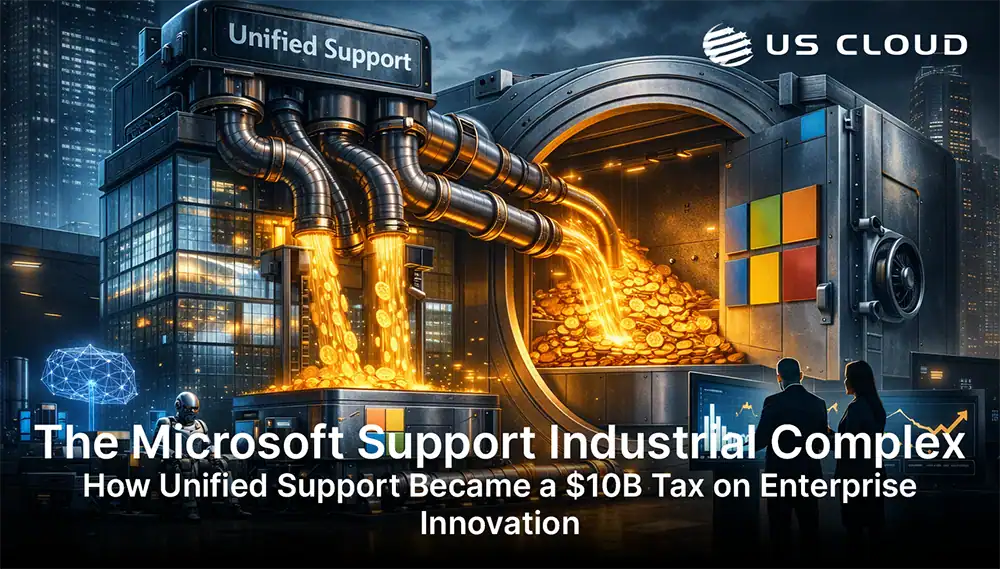
The Microsoft Support Industrial Complex: How Unified Support Became a $10B Tax on Enterprise Innovation