Microsoft Third-Party Support
Microsoft Unified Enterprise Support

White Label Microsoft Support for CSPs, LSPs, and MSPs: Fix Margin and Cut Unified Support Costs.

Cut Microsoft Unified Support costs 30–50% while turning support into a high-margin, partner-owned service
Renee Rose of US Cloud
Written by:
Renee Rose
Published May 05, 2026
White Label Microsoft Support for CSPs, LSPs, and MSPs

Executive Summary

  • Unified Support costs rise 7–13% YoY, even when usage doesn’t
  • You defend the price, but don’t control it
  • Old options fail: low-margin resale, expensive in-house builds, limited accountability
  • Buyers want outcomes: real SLAs, senior engineers, fast escalation
  • White label support flips the model: you own the relationship, not the cost problem
  • 30–50% savings for customers → easier renewals
  • New high-margin recurring revenue for partners
  • ~91% gain leverage with Microsoft by introducing an alternative
  • Bottom line: own support → own the margin and the customer

The problem: Microsoft Unified Support is built to scale revenue—not efficiency

Your customers rely on Microsoft. That’s not changing.

What’s changing is how they feel about the bill. Microsoft Unified Support is priced as a percentage of total Microsoft spend. So every decision about your Microsoft tech stack (products, licenses, headcount, et.) automatically increases support cost.

Even if nothing breaks more often. That’s why enterprises report 7–13% annual cost increases without increased demand. Industry analytics now call this the “AI Tax.”

You don’t need to explain the math. You’re stuck explaining the logic.

Why channel partners feel it first (and hardest)

When the renewal hits, customers don’t call Microsoft. They call you.

And you’re left choosing between three familiar options:

  1. Pass through Unified Support → margin disappears
    This option forces you to absorb the reputational risk when Unified Support underdelivers. Is this the managed relationship you want?
  2. Build internal capability → cost and hiring spiral
    Renewal season turns into a contentious conversation (at best!).
  3. Resell and manage → accountability without control
    Talk about a rock and a hard place. You are stuck between clients unhappy with costs and support and Microsoft’s rigid terms and subpar support.

None of these options fix the core issue: you don’t own the outcome, but you own the relationship risk. “Partner” seems like an overly generous term for what’s happening among you, Microsoft, and your clients.

What enterprise buyers actually expect now

Enterprise buyers have high expectations that Microsoft’s support bundle model is not designed to meet. These four expectations are clearer than crystal:

  1. Written SLAs with real response guarantees. Instead, Microsoft’s contract language buries “best-effort” commitments.
  2. Senior engineers with deep Microsoft expertise. Instead, offshore tier-one agents open a ticket and wait. And your client waits. And you wait. Did I mention the waiting?
  3. A consistent Technical Account Manager.  With the spend your clients are making, they deserve better than a customer success rep who is managing hundreds of accounts and likely needs to consult with someone else to answer questions.
  4. 100% US-based, screened engineers. Regulated industries, government-adjacent organization, and national security compliance require this.  

Unified Support struggles to deliver this consistently at scale. That gap is where alternatives win. That’s why alternatives are gaining traction.

Purpose-built third party alternatives provide faster, more accountable, AND more affordable support than Microsoft’s own offering. This is why third-party alternative adoption is accelerating rapidly.

What is white label Microsoft support (without the fluff)?

White label Microsoft support allows CSPs, LSPs, and MSPs to deliver enterprise-grade Microsoft support under their own brand.

The bottom line: You own the customer. A third-party provider delivers the engineering. Your customer sees one partner: you.

The model at a glance: You own the relationship. US Cloud powers the support.

Your customers never interact with US Cloud. You retain full control of the customer relationship.  How it works:

  • You sell Microsoft support under your brand – your logo and your ticketing system.
  • The customer interacts only with your team. It’s you, your Technical Account Manager, and whoever else on your team you designate.
  • Engineering, SLAs, and escalations run behind the scenes. US Cloud handles all this directly with you.
  • You control pricing, billing, and renewal. Client invoices come from you. Quarterly business reviews, roadmap conversations, renewal ownership and pricing all come from you.

No 24/7 hiring problem. No escalation gap. No rebuilding your business model.

That is exactly what the US Cloud white label program makes possible. Get ready for better margins, improved customer relationships, and fewer Microsoft-induced headaches.
The bottom line: You own the customer. A third-party provider delivers the engineering. Your customer sees one partner: you.
The operational reality (what buyers actually care about)

What’s in it for your customers? Great question! Through the partner program, your customers get:

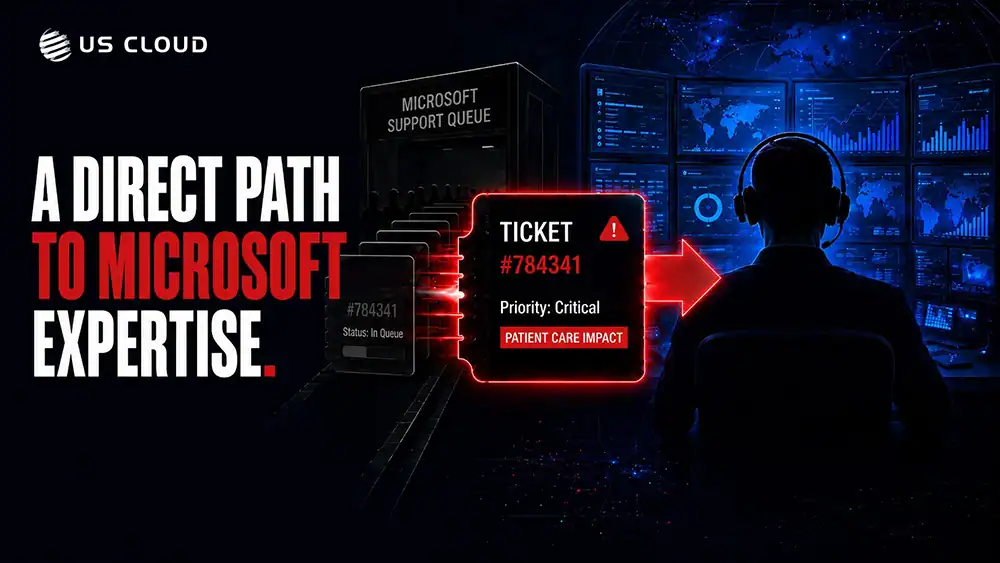
  • Real Technical Account Managers (TAMs). These are engineers accountable for customer outcomes. 100% of the time, TAMs own the ticket instead of Microsoft’s customer service reps rotating through a ticket queue.
  • Written SLAs with 15-minute response guarantees. Remember that waiting mentioned earlier? When critical incidents happen, waiting is the worst.
  • 100% US-based, screened engineers. US Cloud engineers average over 14 years of Microsoft experience.
  • Managed Microsoft escalations when necessary. Push the complexity of dealing with Microsoft onto your US Cloud team so you can focus on managing client relationships. Or upping your golf game.
  • ISO 27001 certification and compliance posture. This is the gold standard for information security, so your healthcare, financial services, manufacturing, and public sector customers  will know they’re in secure hands.
  • Full Microsoft stack coverage. US Cloud’s engineers are experienced in Azure, M365, Dynamics 365, Copilot, and both hybrid and on-premise environments. Basically, with their experience, they’ve handled every possible Microsoft stack.

This is where most alternatives fall apart. Execution matters more than pricing.

“Microsoft support means playing the waiting game. US Cloud’s white label support means playing the ‘everything runs smoothly’ game.” – Renee Rose

The economics are straightforward—and compelling

US Cloud clients typically save 30-50% compared to Microsoft Unified Support. The white label structure situates you between those two price points. The customer saves money relative to what they are currently paying Microsoft.

Your proposal? An easy YES! Plus, you earn a margin on the difference.

I’ll break down a typical scenario for illustrative purposes.

  • Customer’s current Unified Support: $400K/year
  • White label offer: $280K/year
  • Customer savings: $120K/year (30%)
  • Partner cost: $220K
  • Partner margin: $60K annually (plus 0 Microsoft engineering headcount on your side)
  • Scale that across five similar customers: $300K in new annual margin from a service line you did not have to build.

Beyond direct margin, the retention impact compounds the economics. Customers who buy branded support from you are stickier than customers whose primary Microsoft touchpoint is a Unified Support contract Microsoft can sell against directly. When renewal time comes, you are the relationship that holds the environment together.

The moment a credible alternative enters the field, a negotiation leverage dynamic comes into play. In 91% of cases, enterprises that bring a US Cloud estimate see immediate benefits:

  • Microsoft engages faster
  • Pricing becomes flexible
  • Concessions show up earlier

You go from reseller to advisor instantly. That changes the relationship. This isn’t just a new revenue stream. It changes positioning:

  • You own the support experience, not just the license
  • You become harder to displace at renewal
  • You move from vendor manager to strategic partner

Customers don’t churn away from the team that runs their support. Boom! Retention impact.

Where this fits best

The white label Microsoft support program is designed for partners with existing Microsoft EA customers who approaching renewal under Unified Support cost pressure. No significant upfront investment, new headcount, or internal Microsoft engineering expertise required!

These four groups are the white label Microsoft support sweet spot:

  1. CSPs – Accelerate the shift to managed services without building from scratch.
    White label Microsoft support is a natural extension of the managed services pivot Microsoft is already pushing CSPs toward. It converts a pass-through resale line into a branded, recurring, high-margin managed service — exactly the kind of value-add Microsoft’s new incentive structure rewards.
  2. LSPs – Replace shrinking license margin with recurring service revenue.
    For LSPs navigating incentive compression on licensing, white label Microsoft support creates a net-new revenue line independent of the incentive structures Microsoft is dismantling. It answers the question of what you sell when license margins disappear: you sell reliable Microsoft environment outcomes at a price your customers can justify.
  3. MSPs – Close the 24/7 escalation and staffing gap immediately.
    White label Microsoft support solves two MSP problems simultaneously. It eliminates the need to staff 24/7 Microsoft escalation capability — a cost most MSPs cannot absorb. And it converts a service gap into a branded, SLA-backed offering you can charge for confidently.
  4. Partners with EA renewals approaching –The cleanest entry point where cost pressure is highest.
    These organizations already understand the model, trust it, and are actively looking to extend it to Microsoft. Adding Microsoft to an existing third-party support relationship is a straightforward commercial conversation, not an educational one.

How to get started with the US Cloud white label Microsoft support program

Significant upfront investment? Not necessary. New headcount? Also not needed!

One hundred percent of the time, US Cloud provides 100% partner enablement. That means sales training, battlecards, and objection-handling frameworks built specifically for the Unified Support renewal conversation.

You set your own program guidelines that capture the margin differential between US Cloud’s partner rate and your customer-facing price. US Cloud will provide co-selling support where appropriate.

The sweetest of the sweet spots is an existing customer coming up on EA or Unified Support renewal. You the partner show a branded cost comparison (their white label offer compared to your customer’s current Unified Support cost). Let the numbers do the work. Given that 91% of those conversations produce either a customer switch or an immediate Microsoft concession, the worst outcome is still a win for your customer relationship.

Conclusion: the fourth path for Microsoft channel partners in 2026

The three traditional options for channel partners facing Microsoft Unified Support cost pressure — pass it through, build your own capability, or absorb the reputational risk — all lead to the same outcome: margin erosion, churn risk, and customers who see Microsoft instead of you.

There’s a better way. White label Microsoft support through US Cloud’s partner program is the fourth path. Your customers rely on Microsoft. They do not want Microsoft-priced support. And they do not want to manage an independent support relationship on top of everything else they are managing. They want their partner to solve it — cleanly, reliably, under a brand they already trust.

That is exactly what the US Cloud white label program makes possible. Get ready for better margins, improved customer relationships, and fewer Microsoft-induced headaches.

FAQ: white label Microsoft support

What is white label Microsoft support?

A model where CSPs, LSPs, and MSPs deliver Microsoft support under their own brand while a third-party provider handles engineering, SLAs, and escalation behind the scenes.

How much can customers save vs Microsoft Unified Support?

Typically 30–50% annually, depending on Microsoft spend and support structure.

Why does Microsoft Unified Support cost increase every year?

Because pricing is tied to total Microsoft spend—not actual support usage—costs rise as environments grow.

Is this model credible at enterprise scale?

Yes. Independent third-party support is already widely adopted across Oracle, SAP, and IBM—and now formally recognized for Microsoft by Gartner.

Start Your Partnership

Renee Rose of US Cloud
Renee Rose
Renee Rose is a Channel Program Manager at US Cloud who specializes in building and scaling partner ecosystems that drive sustainable revenue growth and long-term retention. With over two decades of experience across sales, channel leadership, and customer success, she has led high-impact initiatives spanning partner strategy, pricing, enablement, and lifecycle management. She has played a key role in developing and executing channel strategies that fuel consistent growth while aligning cross-functional teams to turn complex initiatives into scalable, partner-adopted programs. Known for bridging strategy and execution, she delivers partner programs that translate directly into measurable business impact.
Get an estimate from US Cloud to get Microsoft to lower its Unified support pricing

Don't Negotiate Blind with Microsoft

91% of the time, enterprises that bring a US Cloud estimate to Microsoft, see immediate discounts and faster concessions.

Even if you never switch, a US Cloud estimate gives you:

  • Real market pricing to challenge Microsoft’s “take it or leave it” stance
  • Concrete savings targets – our clients save 30-50% vs Unified
  • Negotiating ammunition – prove you have a legitimate alternative
  • Risk-free intelligence – no obligation, no pressure


US Cloud was the leverage we needed to cut our Microsoft bill by $1.2M
— Fortune 500, CIO