Slash High Risks and Prices: Microsoft On-Demand Assessments without Unified Lock-In.

The system isn’t down—yet. But the audit report says you’ve got misconfigurations across every dashboard. By the time you realize the “proactive” assessment uncovered more problems than it solved, you’re already locked into another 36 months with Microsoft.
In the end, the CIO is staring at a risk report emblazoned in red, while procurement is fuming over Microsoft’s latest price hike, and IT is stuck in the trenches with dysfunctional systems and lagging support for it.
There’s a way out of this—but you’ll need to get started before your next Microsoft contract negotiation comes up.
Executive Summary
- Microsoft Unified On-Demand Assessments identify risks, misconfigurations, and performance issues across Azure, Microsoft 365, and other platforms—but they come bundled with Unified’s costly contracts.
- Enterprise IT, procurement, and executives value these assessments for proactive risk reduction, ROI justification, and better visibility into IT health.
- US Cloud delivers equivalent proactive assessments and support without locking organizations into Microsoft’s expensive, restrictive 3-year contracts.
- Switching to third-party Microsoft support helps enterprises lower costs, improve service quality, and avoid the cycle of outsourced support and rising fees.
Why On-Demand Assessments Matter Now
Enterprise IT leaders, procurement teams, and executives all face the same annual challenge: the Microsoft Unified Support renewal. Costs go up, the contract horizon stretches three years or more, and yet the question lingers—do we really need Unified just to keep proactive services like Microsoft’s On-Demand Assessments?
The short answer: no.
On-Demand Assessments are valuable tools, certainly, but they are not unique to Microsoft’s Unified Support. Third-party providers like US Cloud deliver the same proactive benefits—often with stronger accountability, predictable pricing, and better service quality. That means you can avoid Unified’s ballooning costs and restrictive contracts without sacrificing risk reduction or IT health.
What Are Microsoft On-Demand Assessments?
Microsoft On-Demand Assessments are part of the Services Hub platform, available only to Unified Support customers. They are automated health checks that use telemetry and analytics (such as Azure Log Analytics) to scan an organization’s Microsoft environment.
The output:
- A prioritized list of risks, action items, and misconfigurations
- Security and performance recommendations
- Prescriptive guidance for remediation
Think of them as IT environment diagnostics, designed to catch problems before they turn into outages.
Why Enterprises Value On-Demand Assessments
Different stakeholders inside an enterprise view these assessments through their own lens:
- IT experts see them as a fast way to surface misconfigurations, patch gaps, and performance issues.
- Procurement professionals view them as a way to justify Unified Support’s steep costs with “value add” deliverables.
- Executive teams value the visibility into IT risk, security posture, and business continuity.
That’s why Microsoft positions On-Demand Assessments as proof that Unified Support delivers proactive value.
However, what you’re really getting is just access to a system that can automatically check your systems for you and can alert you to possible action items along with some informative materials about best-practice solutions. This does not include a human to talk to if you don’t know how to fix those issues.
The Myth: You Need Unified to Get Proactive Assessments
It’s true that Microsoft’s Services Hub and its specific On-Demand Assessments are tied to Unified contracts. But the capability itself—proactive risk identification, configuration reviews, and prioritized remediation—is not exclusive to Microsoft.
Independent third-party Microsoft support providers replicate these services with their own processes, tooling, and senior engineers. In fact, analysts like Gartner recognize third-party support (TPSS) as a legitimate enterprise alternative to OEM programs.
The Reality: Third-Party Support Delivers Equivalent (or Better) Value
You really do have a choice when it comes to keeping your Microsoft systems supported reactively and proactively. It’s not just an abstract or new idea. Support providers like US Cloud offer proven and time-tested solutions for organizations looking to escape the Microsoft EA Trap. Below, you’ll find some of the strategies behind this solution.
Named Resources and Contextual Knowledge
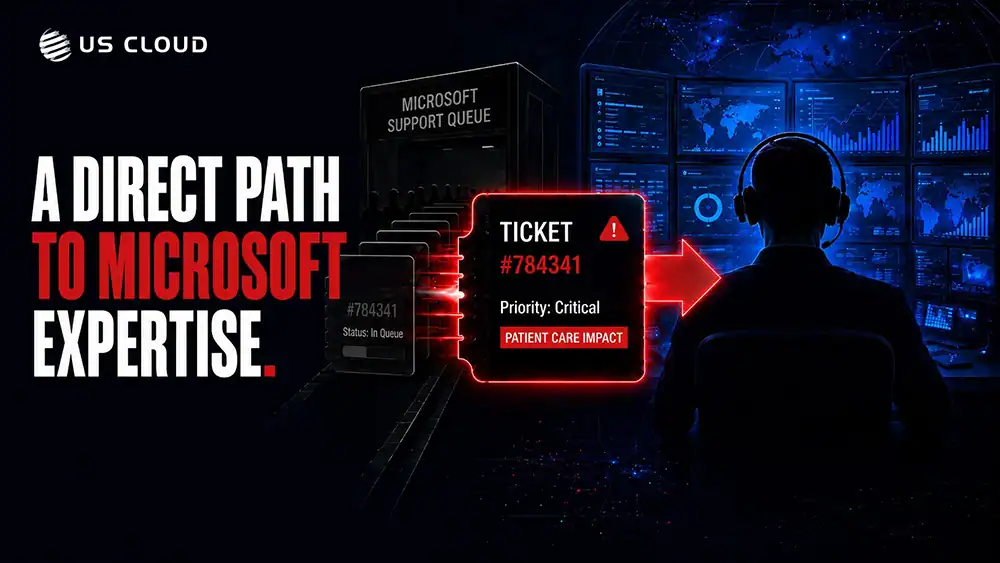
Instead of an anonymous ticket queue, US Cloud assigns named Technical Account Managers (TAMs) and senior engineers who understand your environment. That means assessments aren’t just automated reports—they’re contextualized insights from real humans who know your IT infrastructure.
Predictable Pricing and Real Savings
Microsoft’s Unified Support is priced as a percentage of your total Microsoft spend—so your support bill rises automatically as your cloud and licensing spend grows.
By contrast, third-party providers like US Cloud use fixed-fee contracts that aren’t tied to license growth. Clients typically save 30–50% compared to Unified while gaining price predictability.
Faster, U.S.-Based Support
Unified is notorious for offshore routing and long escalation chains. US Cloud emphasizes 100% U.S.-based engineers and faster SLA response times. That reduces mean time to resolution (MTTR) and keeps communication simple.
Actionable Deliverables
Third-party providers deliver proactive reviews and remediation roadmaps, just like On-Demand Assessments—but with added context and direct engineer involvement. These aren’t generic reports; they’re actionable plans tied to your priorities.
The Real Limitations—and How to Manage Them
To be credible, it’s important to acknowledge where Unified still has unique value. Only Microsoft can deliver OEM-level code fixes and certain product defect escalations. That’s the one area where third-party providers cannot directly substitute. In those cases, third-party Microsoft support providers may need to escalate issues to Microsoft.
However: some key caveats should also be noted
- The US Cloud team experts have the edge on solution times compared to Unified engineers, even when a CrowdStrike incident took down systems around the world.
- US Cloud solves over 80% of all submitted tickets in-house with U.S.-based engineers—without needing escalation to Microsoft.
- When an escalation to Microsoft is required, US Cloud’s trusted escalation partners pave the way to a seamless and smooth resolution.
While it is true that there are certain cases only Microsoft can solve, it’s also true that high-performing third-party support solutions will maintain an open escalation path with Microsoft. There is a way to have the best of both worlds.
Procurement Playbook: How to Evaluate Alternatives
If you’re weighing Unified versus a third-party provider, here’s a practical checklist for sourcing teams:
- Confirm named TAMs and engineers as part of the SLA.
- Run a pilot period to prove support quality and ROI.
- Demand price protection clauses and avoid percentage-based models.
- Track clear KPIs: MTTR, first-response time, and escalation resolution.
- Review escalation workflows for Microsoft-only fixes.
- Request a sample assessment report to compare depth and quality.
Validate compliance certifications (SOC, GDPR, data sovereignty).
Unified vs. Third-Party at a Glance
| Feature | Microsoft Unified | US Cloud |
|---|---|---|
| Proactive Assessments | Automated Services Hub On-Demand Assessments | Named TAMs + contextual health checks built into proactive hours |
| Pricing Model | % of Microsoft spend (rises with cloud growth) | Fixed fee, predictable (30–50% savings) |
| Support Quality | Offshore routing, SLA-driven | 100% U.S.-based, faster SLAs |
| Escalations | Direct Microsoft engineering | Vendor triage + optional OEM escalation |
Don’t Stay Locked in to Keep Proactive Value
On-Demand Assessments are valuable—but they’re not reason enough to stay trapped in Microsoft Unified Support’s rising costs and restrictive contracts.
Third-party providers like US Cloud deliver the same proactive insights, often with better service quality, faster response times, and predictable pricing. For most enterprises, the smarter play is to switch—or at least pilot—a third-party provider.
You don’t have to accept the 3-year trap. You can get proactive assessments, protect your budget, and raise service quality—all without Unified. Book a call with US Cloud today to learn how you can start a trial period on the service that will preserve your proactive support while slashing costs in half.

Partner-Delivered Microsoft Support: A Unified Support Alternative for Enterprises
The Channel Support Spiral: How Microsoft Partners Can Protect Margin as Unified for Partner Rolls Out