What Would Your CIO Do With an Extra $5 Million?.

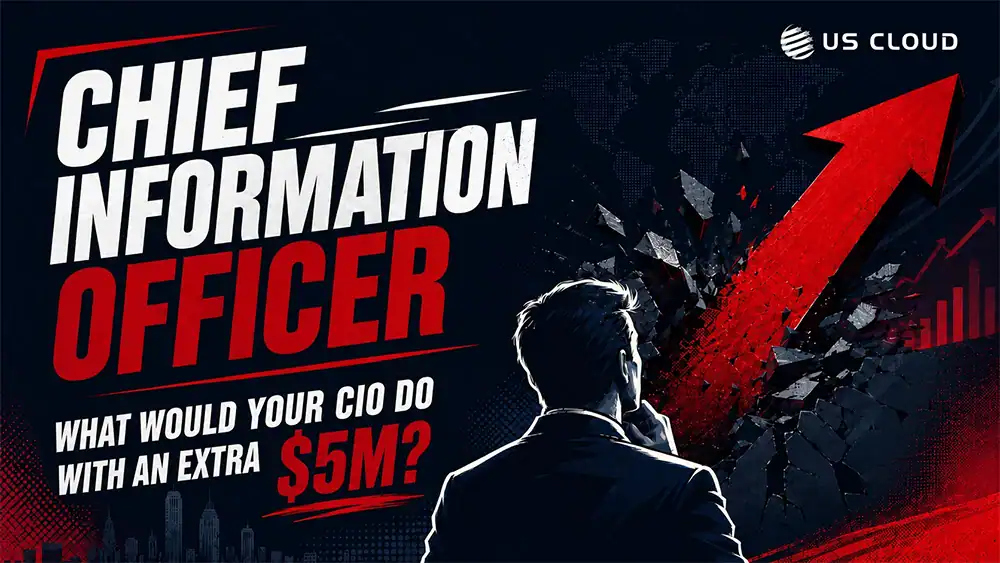
Enterprise CIOs are being asked to fund AI, harden security, modernize infrastructure, reduce risk, and absorb rising Microsoft costs at the same time. Most are looking for new budget. The better question is where budget is already being wasted. For many enterprises, that answer is Microsoft Unified Support.
Support has been treated like fixed overhead for too long. It is not. It is a recurring capital-allocation decision. When an enterprise spends $12 million a year on Microsoft support, and 40% of that spend can be reclaimed through a full replacement support model, the CIO is not just cutting cost. The CIO is freeing almost $5 million a year for the work the business actually cares about: Copilot adoption, Zero Trust, SOC modernization, cloud completion, and application modernization. That is the support market shift. The question is no longer whether enterprises need Microsoft support. They do. The question is whether Microsoft should continue to define the economics of that support by default.
ملخص تنفيذي
- Microsoft support spending is no longer just an operational expense. For many enterprises, it is one of the most overlooked sources of innovation capital in IT.
- Enterprises that move from Microsoft Unified Support to an independent support provider typically reduce support costs by 30% to 50% in year one.
- For a company with a $200 million annual Microsoft footprint and a $12 million support contract, a 40% reduction frees approximately $4.8 million per year, or $14.4 million over three years.
- CIOs are redirecting reclaimed support budget into Microsoft 365 Copilot governance, Microsoft Fabric, Zero Trust, SOC modernization, Azure migration, application modernization, and other industry-specific priorities.
- Microsoft Unified Support is typically priced as a percentage of total Microsoft spend, so support costs can rise as enterprises expand Azure, Microsoft 365, Copilot, Fabric, or Dynamics usage, even when ticket volume or service quality does not increase proportionally.
- A credible third-party Microsoft support quote gives enterprises renewal leverage and helps determine whether the current support model is the highest and best use of capital.
- The CIO opportunity is not simply to cut support costs. It is to convert non-differentiating spend into strategic funding for AI adoption, cyber resilience, legacy modernization, and business growth.
What are Microsoft support savings?
Microsoft support savings are the dollars enterprises can reclaim by benchmarking or replacing Microsoft Unified Support with an independent Microsoft enterprise support provider. For large organizations, those savings can reach 30% to 50% in year one and can be redirected into higher-value priorities such as Copilot governance, Zero Trust security, SOC modernization, Azure migration, and application modernization.
Support spending is innovation capital, not fixed overhead
Most finance teams classify Microsoft support as a fixed cost, the same bucket as facilities or insurance. That classification is wrong for one structural reason: support spend under Microsoft Unified Support is priced as a percentage of total Microsoft spend, typically 6% to 12%. When an enterprise adds Copilot licenses, expands Azure consumption, or rolls out Microsoft Fabric, the support fee rises automatically, with no corresponding increase in ticket volume or service quality.
This is the calculation CIOs are now running: every dollar locked into that percentage-based fee is a dollar unavailable for AI governance, identity modernization, or application rationalization. Treating support as a negotiable, benchmarkable category, the same way procurement already treats cloud infrastructure and networking, is what turns a cost center into a funding source.
Why This Funding Source is Hiding in Plain Sight
The opportunity is often missed because Microsoft support sits inside the renewal motion. It is surrounded by licensing, Azure consumption, security commitments, product bundles, and enterprise agreements. By the time the renewal reaches executive review, the support line often feels like a required cost of doing business. That assumption benefits the incumbent model.
It keeps support attached to Microsoft growth instead of business value. As the Microsoft environment expands, the support contract expands with it, even when the enterprise is not receiving a proportional increase in engineering access, escalation ownership, responsiveness, or measurable outcomes. CIOs who challenge that assumption create a different conversation with finance. The question becomes not only “can we reduce this line item?” The better question is “what strategic work could this same budget fund if we changed the support model?” That is where Microsoft support savings become innovation capital.
What enterprises are funding with reclaimed Microsoft support budget, by industry
A health system spending $8 million to $15 million annually on Microsoft support can typically reclaim $2.4 million to $7.5 million through a support model change, capital it redirects toward clinical AI, EHR optimization, and cyber resilience. The pattern holds across industries, though the reinvestment priority shifts with each sector’s specific pressure point. The reinvestment priority changes. The opportunity does not.
| الصناعة | Enterprise Profile | Annual Support Spend | Potential Savings (30-50%) | Typical Reinvestment |
|---|---|---|---|---|
| الرعاية الصحية | Large health system | $8M-$15M | $2.4M-$7.5M | Clinical AI, EHR optimization, security |
| الخدمات المالية | Top bank or insurer | $10M-$20M | $3M-$10M | Fraud detection, AI, regulatory compliance |
| التصنيع | Global manufacturer | $6M-$12M | $1.8M-$6M | Industrial IoT, automation |
| الحكومة | Federal/state agency | $5M-$18M | $1.5M-$9M | Citizen services, Zero Trust |
| التعليم العالي | University system | $3M-$8M | $900K-$4M | Research computing, student success platforms |
| الاتصالات السلكية واللاسلكية | National provider | $15M-$30M | $4.5M-$15M | 5G buildout, AI network operations |
The larger point is simple. Support savings are not just savings. They are redeployable capital.
Reclaimed support budget is funding enterprise Copilot deployment, not just licenses
A Microsoft 365 Copilot license is the smallest line item in a successful AI rollout. The real cost sits in data governance configuration, Microsoft Purview policy design, change management, and the ongoing tuning that determines whether Copilot adoption sticks or stalls. Organizations that redirect reclaimed support dollars into these workstreams move faster than those waiting for a separate AI budget cycle, because the funding already exists inside the technology budget rather than requiring new approval.
A $5 million reinvestment, the typical savings outcome for a $200 million Microsoft environment, can fund enterprise-wide Copilot governance and adoption support, Microsoft Fabric implementation, and AI-specific security controls in the same fiscal year. This is not a theoretical savings story. That is a practical AI acceleration plan.
Zero Trust and SOC modernization compete for the same reclaimed dollars
Boards now treat cybersecurity spend as non-discretionary, which puts it in direct competition with AI initiatives for the same finite budget. CIOs using reclaimed support savings are funding Zero Trust identity programs, SOC modernization, and ransomware resilience initiatives without asking the board for incremental budget. The advantage is sequencing: security modernization and AI governance can run in parallel instead of competing for the same approval cycle, because the funding source is the same reclaimed support spend rather than two separate budget requests.
Legacy infrastructure debt is the quiet tax on every other initiative
Enterprises that completed a “cloud migration” five years ago are often still running substantial on-premises infrastructure underneath it. That legacy footprint, old SQL Server instances, unconsolidated data centers, manual disaster recovery processes, costs more to secure and maintain every year it persists. Support savings redirected into Azure migration completion, application modernization, and backup modernization shrink that legacy footprint, which in turn reduces the ongoing security and operational burden on every team downstream.
Industry-specific reinvestment patterns
Different industries. Same lesson: The Microsoft support renewal is no longer just an IT support decision. It is a funding decision.
Healthcare: Reclaimed support spend funds EHR optimization, telehealth platform expansion, and AI-assisted clinical workflows, where the investment connects directly to patient outcomes rather than backend efficiency alone.
Financial services: Banks and insurers direct savings toward fraud detection models, AI-powered customer engagement, and regulatory compliance modernization, the three areas where technology has become the primary competitive differentiator in the industry.
Government: Public sector agencies redirect support savings into citizen-facing digital services and Zero Trust infrastructure without requesting additional taxpayer funding, since the capital comes from a Microsoft contract renegotiation rather than a new appropriations request.
Manufacturing: Global manufacturers fund industrial IoT, predictive maintenance, and supply chain visibility programs, investments that reduce downtime and directly affect production-line competitiveness.
Telecommunications: National providers apply savings to 5G network buildout and AI-driven network operations, where even a modest percentage reduction in support spend unlocks millions for infrastructure that wouldn’t otherwise be funded this cycle.
How IT procurement teams are forcing this conversation
IT procurement and sourcing leaders increasingly subject Microsoft support contracts to the same competitive benchmarking they already apply to cloud infrastructure and networking contracts. That means requesting a third-party quote before every Microsoft Unified Support renewal, even when the enterprise has no near-term intention of switching providers. The existence of a credible competing quote is itself negotiating leverage: it gives procurement a market reference point against Microsoft’s percentage-based pricing, which has no external benchmark unless one is manufactured by the buyer.
Gartner has recognized US Cloud as the only independent provider capable of fully replacing Microsoft Unified Support for enterprise customers, which is what allows procurement teams to bring a credible, analyst-validated alternative into the negotiation rather than an unproven vendor.
The $200 million scenario, worked out in full
Consider an enterprise spending $200 million annually across Azure, Microsoft 365, Dynamics 365, and related Microsoft products. If that enterprise’s Unified Support contract costs $12 million per year, and a switch to an independent support provider produces a 40% reduction, the result is $4.8 million in reclaimed budget annually. Over a three-year planning cycle, that compounds to $14.4 million, enough to fund a full AI governance program, a major Zero Trust rollout, and an application modernization initiative in the same window, without a single additional dollar requested from the board.
What the $5 Million Can Fund
Five million dollars can fund the governance layer required for a serious Copilot rollout. Not just licenses. Governance. Data readiness. Microsoft Purview configuration. Access controls. Change management. Adoption support. The work that determines whether Copilot becomes a business accelerator or another underused enterprise tool.
It can advance Zero Trust. Identity modernization. Privileged access controls. Conditional access. SOC modernization. Ransomware resilience. The security work every board wants accelerated, but few CIOs have fully funded. It can move modernization work out of the backlog. Azure migration completion. SQL Server modernization. Backup modernization. Application rationalization. Disaster recovery improvement. The unglamorous infrastructure work that reduces risk, complexity, and operational drag.
The new CIO playbook treats support as a performance category, not a sunk cost
The CIOs capturing this opportunity ask a different question than their predecessors did. Instead of “does our support contract cost too much,” they ask “does our current support model represent the highest and best use of this capital, measured against outcomes, responsiveness, and flexibility.” That reframing is what turns an annual renewal conversation into an annual capital-allocation decision.
Why this matters beyond 2026
Technology spending is continuing to concentrate in AI, automation, and cybersecurity, which means the enterprises that build budget flexibility into their Microsoft contracts now will have a structural advantage entering each subsequent renewal cycle. Innovation capital, the budget freed from non-differentiating spend and redirected into strategic initiatives, is becoming as much a competitive lever as the technology investments it funds.
الخلاصة
The enterprises leading their industries over the next decade will not be the ones spending the most on technology. They will be the ones extracting the most strategic value from every technology dollar, including the dollars currently locked inside a Microsoft support contract that hasn’t been competitively benchmarked in years. The question is no longer whether support spending matters. The question is whether your current support model is the highest and best use of those funds, and Gartner has already identified one validated way to find out.
Microsoft Support Savings FAQ
What are Microsoft support savings?
Microsoft support savings are the dollars an enterprise can reclaim by benchmarking or replacing Microsoft Unified Support with an independent Microsoft enterprise support provider. For large organizations, these savings can often be redirected into AI, cybersecurity, cloud modernization, and other strategic IT priorities.
How much can enterprises save by replacing Microsoft Unified Support?
Enterprises that move from Microsoft Unified Support to an independent support provider typically reduce Microsoft support costs by 30% to 50% in year one. Actual savings depend on Microsoft spend, current support contract structure, ticket volume, product mix, and support requirements.
What can CIOs fund with Microsoft support savings?
CIOs can use reclaimed Microsoft support budget to fund Microsoft 365 Copilot governance, Microsoft Fabric implementation, Zero Trust programs, SOC modernization, Azure migration, SQL Server modernization, backup modernization, application rationalization, and other transformation priorities.
Should enterprises benchmark Microsoft Unified Support before renewal?
Yes. Enterprises should benchmark Microsoft Unified Support before renewal because support costs often scale with Microsoft spend. A credible third-party Microsoft support quote gives CIOs, finance, and procurement a market-based comparison before committing millions in annual support spend.
Does replacing Microsoft Unified Support mean replacing Microsoft products?
No. Replacing Microsoft Unified Support does not mean replacing Microsoft products. Enterprises can continue using Azure, Microsoft 365, Dynamics 365, Windows Server, SQL Server, Copilot, and the broader Microsoft ecosystem while evaluating a different enterprise support model.
US Cloud is the only independent Microsoft support provider Gartner has recognized as a full replacement for Microsoft Unified Support. US Cloud delivers enterprise-grade support across Azure, Microsoft 365, Dynamics 365, Windows Server, SQL Server, and the broader Microsoft ecosystem, helping enterprises reduce support costs by 30% to 50% in year one while redirecting the savings into AI, cybersecurity, and modernization initiatives.

Smarter Support, Stronger Schools: Redirecting $200M in Support Savings
تمويل الجيل القادم من الرعاية الصحية: كيف تعيد أنظمة الرعاية الصحية استثمار الوفورات المحققة من خدمة "Microsoft Unified Support" في السجلات الطبية الإلكترونية والذكاء الاصطناعي والأمن