The Channel Support Spiral: How Microsoft Partners Can Protect Margin as Unified for Partner Rolls Out.

Résumé
- Microsoft partner support is changing, and partners should not assume the old escalation model will stay economical.
- CSPs, LSPs, and MSPs may own the customer relationship, but many do not own the full Microsoft escalation engine.
- That gap creates margin risk, renewal risk, and customer experience risk.
- White label Microsoft support gives partners a better path: keep the customer, protect margin, and deliver enterprise-grade support under their own brand.
- The savings can help customers reinvest in AI, security, modernization, and better digital experiences.
What is the Channel Support Spiral?
The channel support spiral is the margin and customer relationship pressure Microsoft partners face when support costs rise, escalation paths become harder to manage, and customers still expect the partner to own the outcome
Introduction
Your customers rely on Microsoft. That is not changing. What is changing is the support math behind the scenes. For years, many CSPs, LSPs, and MSPs could treat Microsoft escalation as the safety net. You owned the customer relationship. Microsoft owned the deepest escalation path. Everyone knew the dance.
But now that Microsoft partner support continues moving toward a more structured, Unified-style model, that dance gets more expensive. Maybe a lot more expensive. And when support costs rise, the customer does not call Microsoft first. They call you.
That means partners need to answer a very commercial question: if Microsoft escalation becomes more expensive, slower, or harder to navigate, are you ready to parter with US Cloud to provide world-class support for your customers?
What Is Changing in Microsoft Partner Support?
Unified for Partner is coming to Microsoft partners in FY27 with phased rollout planned in FY27. For partners, the signal is clear: Microsoft support is becoming more structured, more commercial, and more central to the customer relationship. Support is no longer just the thing that happens after the sale. It is becoming part of the sale.
Microsoft’s current model is more fragmented. Partners rely on a combination of technical support benefits to resolve escalation workflows. It functions more like a loose safety net. Unified for Partner is tied to partner business scale. Unified for Partner uses a revenue-based pricing aligned to CSP cloud business. That means partners’ support spend will be billed as an overall percentage of total spend. This is in contrast to the current pricing basis, which can be plan-based, benefit-based, or incident-based depending on the partner’s specific program.
If the Unified for Partner pricing model is triggering déjà vu, that’s because it’s quite similar to Microsoft’s Unified Support model for enterprise companies.
Why Partners Feel this First
Microsoft has described a new partner support structure, but partners should not assume a new pricing model automatically solves the customer experience problem. If escalation still feels slow, layered, or hard to navigate, the partner still owns the fallout. That means both Microsoft partners and their clients are stuck dealing with multi-tiered layers of ticket communication, slow response times, and no shortage of headaches and frustration while the issue resolution remains pending.
When Microsoft support is frustrating, it is the partner who absorbs the relationship risk. Customers expect their partner to own the problem when the reality is the partner is just as stuck with lackluster Microsoft support as their customer. Customers may unfairly blame their Microsoft partners, not understanding that their partner is also at Microsoft support’s mercy for satisfactory resolution.
To placate frustrated customers, partners may be forced to choose between absorbing costs or passing them back to customers. Neither option feels like a growth strategy. So where does that leave partners who are relying on Microsoft support? Something about a rock and a hard place, I would say.
Three Bad Options Partners Know Too Well
What does the channel support spiral look like? It starts with three familiar options.
- Pass the Cost Through – This protects your books in the short term, but makes the renewal conversation harder. The customer sees a higher bill and asks what has improved. If the answer is, “not much,” good luck making that feel strategic.
- Build the Capacity Yourself – You could hire senior Microsoft engineers, cover 24/7 escalation, manage SLAs, support the full Microsoft stack (including security) across cloud, hybrid, and on-premises environments. This is not a small lift. This is a complete business model.
- Keep Paying for Microsoft Escalation – This keeps the old model and does not solve the ownership problem, but you keep paying more and more. You still own the customer relationship while Microsoft controls too much of the outcome.
Here is the fourth option that gets you out of the spiral: White Label Microsoft Support. You keep the customer. You keep the brand. You keep the renewal conversation. You save money. US Cloud powers the engineering behind the scenes.
Why a Traditional MSP or CSP Model May Not Be Enough
MSPs and CSPs are the right relationship owner. That part is not in question. The customer trusts the partner, calls the partner first, and expects the partner to drive the outcome. The problem is what happens after the call.
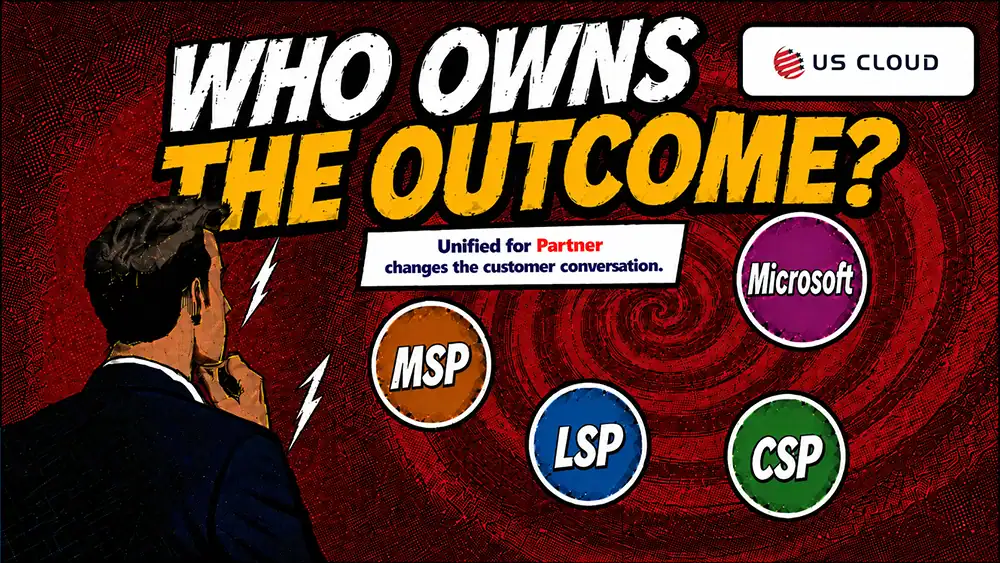
Every partner model has a strength. Every partner model also has a point where the model runs out of runway. CSPs are built for licensing and subscription motion. MSPs are built for day-to-day operations. LSPs and VARs are built for procurement and renewal guidance. None of those motions were designed to absorb deep, multi-product Microsoft escalation at enterprise scale, especially as Unified for Partner pricing reshapes what that escalation costs.
Here is how the most common partner support models stack up, and where each one tends to get strained.
Comparison Table: Microsoft Support Models for Partners
| Model | What It Does Well | Where It Gets Strained | Customer Impact | Partner Impact |
|---|---|---|---|---|
| CSP | Owns licensing, billing, cloud subscriptions, and customer relationship | Complex escalations may still depend on Microsoft or distributor support | Customer may experience delays or unclear escalation ownership | Partner owns the frustration but may not control the fix |
| MSP | Owns day-to-day IT operations, monitoring, managed services, and user support | Deep Microsoft escalation across the full stack can require specialized senior engineers | Downtime lasts longer when issues move beyond standard managed services | Senior staff get pulled into expensive, low-margin escalation work |
| LSP / VAR | Strong licensing, procurement, EA, and renewal guidance | Often not built for hands-on technical break/fix ownership | Customer may see support and licensing as disconnected | Partner stays tied to licensing value instead of service value |
| Assistance unifiée Microsoft | Direct Microsoft coverage across Microsoft products | Pricing can rise as Microsoft spend grows, even if support usage does not | Higher cost may not feel matched by faster or more personal support | Customer relationship may shift closer to Microsoft |
| US Cloud White Label Support | Partner-branded Microsoft support powered by specialized engineers | Requires partner alignment on packaging, pricing, and handoff | Faster response, clearer ownership, and support under a trusted partner brand | Protects margin, retention, and partner-branded value |
The Real Cost is Not Just the Microsoft Escalation Bill
The expensive part of Microsoft support is not always the escalation fee. It’s the waiting. The downtime. The internal scramble. The customer confidence hit. The renewal conversation that suddenly gets a little colder. And with the new Unified for Partner pricing model as a percentage of overall spend, the price conversation gets even colder.
The real cost is customer dissatisfaction fueled by internal productivity loss, renewal friction, churn risk, and the lost opportunity to reinvest in higher-value projects. Support cost shows up on the invoice. Support quality shows up everywhere else.
Turn Support Savings into AI, Security, and Modernization Budget
US Cloud saves customers 30-50% off their Microsoft support bill. These support savings give you a double win. Not only do you get to cut down on your own expenses, but you can turn the money you are saving your customers into an extra revenue stream. Your customers can fund other IT initiatives like Copilot and AI, security, or other modernization efforts. And who are they turning to help them invest in these projects? You, their trusted partner.
White Label Microsoft Support: The Partner-Owned Model
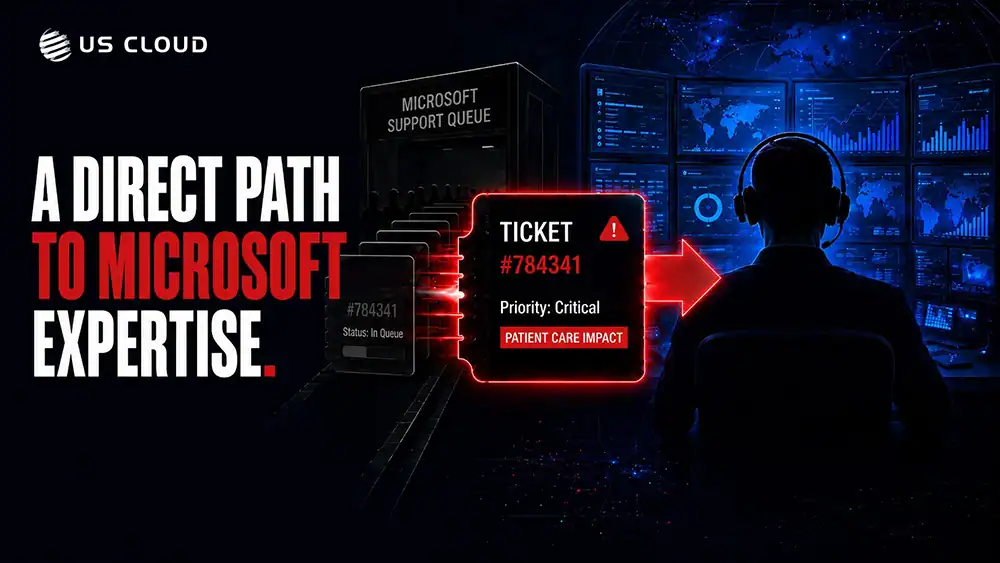
White label support lets partners deliver Microsoft support under their own brand while US Cloud provides the engineering, SLAs, escalation depth, and Microsoft support expertise behind the scenes.
How it works:
- The partner owns the customer relationship.
- The customer sees the partner’s brand.
- US Cloud supports the partner behind the scenes.
- The partner controls pricing, packaging, billing, and renewal.
- The customer gets a stronger support experience.
- The partner creates a branded recurring service line.
Your customer does not want another vendor to manage. They want their partner to solve the problem cleanly. White label support lets you do that without building a Microsoft support organization from scratch.
Partner Readiness Checklist
Partners should ask:
- Which customers rely most heavily on Microsoft escalation today?
- Which accounts are approaching EA, CSP, or Unified Support renewal?
- How much senior engineering time are we spending on Microsoft support issues?
- Where are support delays putting customer satisfaction at risk?
- Which customers would welcome a lower-cost support alternative?
- Can we package support under our own brand?
- Do we have a clear response to procurement when they ask, “What is the alternative?”
- Are we treating support as a pass-through cost or a strategic revenue line?
FAQ Suggestions
What is changing in Microsoft partner support?
Microsoft is modernizing partner support offerings, including the move toward Unified for Partner in FY27. Partners should review how support changes may affect escalation costs, customer support ownership, and renewal conversations.
Why should CSPs and MSPs care about Microsoft support changes?
CSPs and MSPs often own the customer relationship, even when Microsoft owns the platform. If escalation costs rise or support quality slips, partners may absorb the margin pressure and relationship risk.
Why might an MSP or CSP need white label Microsoft support?
Many MSPs and CSPs are strong at licensing, managed services, and customer relationship management, but complex Microsoft escalation can require specialized engineering depth, faster SLAs, and broader Microsoft stack coverage.
What happens once a partner has adopted US Cloud’s White Label Support program?
The customer’s Microsoft support pain ends. Your branded support alternative means your customer gets faster support. US Cloud powers the engineering behind the scenes. Partner-client relationship is preserved and renewal conversations get easier.
How does white label Microsoft support help partners protect margin?
White label support allows partners to sell Microsoft support under their own brand while US Cloud provides the engineering behind the scenes. The customer saves compared to Microsoft Unified Support, and the partner can create a recurring margin opportunity.
How can support savings be reinvested?
Customers can redirect support savings into AI readiness, Copilot adoption, cybersecurity, cloud modernization, identity improvements, endpoint management, and better user experience.

Partner-Delivered Microsoft Support: A Unified Support Alternative for Enterprises
Assistance Microsoft en marque blanche pour les CSP, LSP et MSP : optimisez vos marges et réduisez vos coûts d'assistance global